

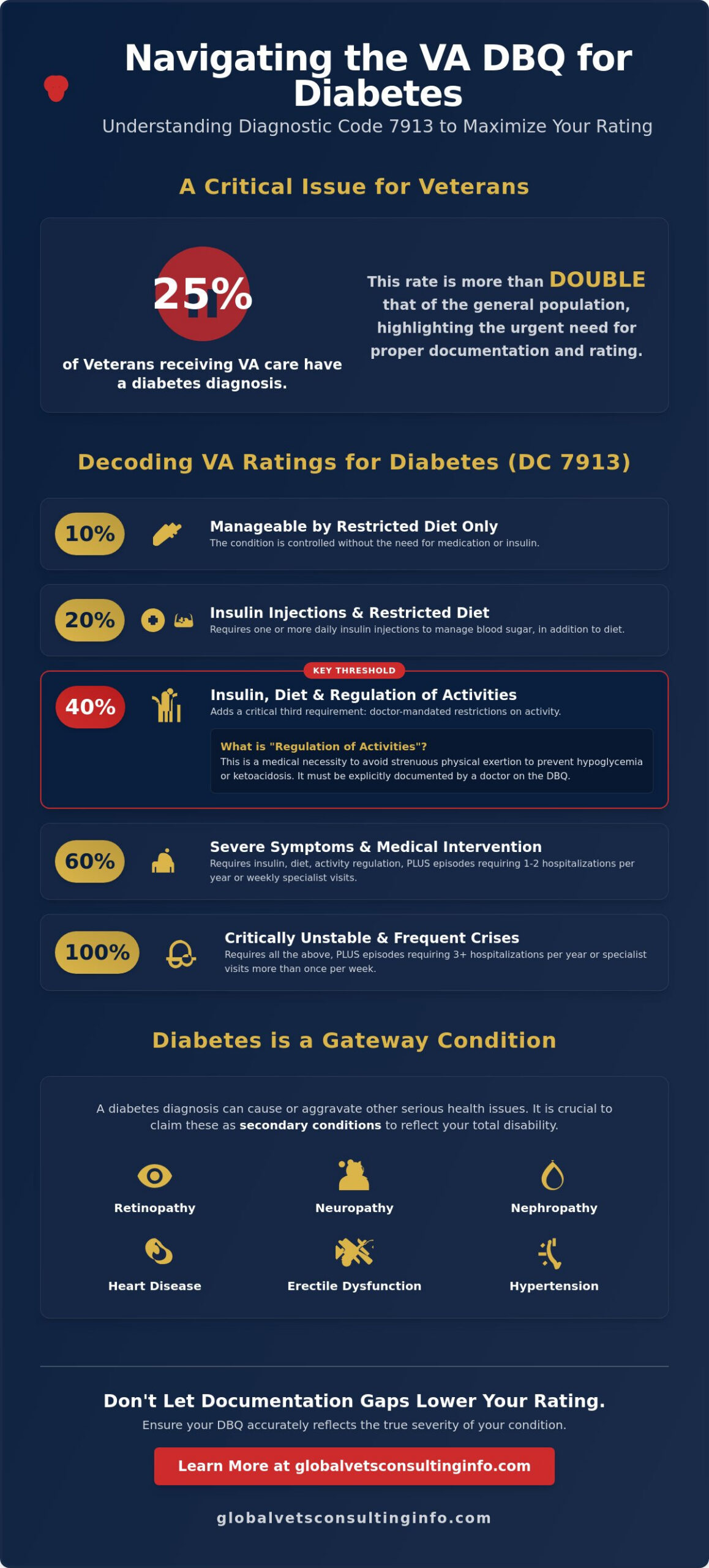
Nearly 25% of veterans receiving VA care have a diabetes diagnosis, which is more than double the rate found in the general population. You likely already know that managing your blood sugar is only one part of the struggle, and proving the true severity of your condition to the VA can feel like an even bigger hurdle. It’s common to worry that a standard exam won’t capture how much you must restrict your daily activities just to avoid a dangerous hypoglycemic episode.
We understand that the gap between your medical reality and a VA rating decision often comes down to how your symptoms are documented. This guide explains how to accurately complete the dbq for diabetes type 2 so your evidence speaks the VA’s technical language and helps you secure the disability rating you’ve earned. You’ll gain a clear understanding of Diagnostic Code 7913, the specific requirements for documenting “regulation of activities” to reach a 40% rating or higher, and how the 2.8% cost-of-living adjustment for 2026 impacts your monthly compensation.
Key Takeaways
- Learn how the VA utilizes Diagnostic Code 7913 to translate your medical symptoms into a specific disability percentage and monthly compensation rate.
- Identify the exact documentation thresholds for insulin use and dietary restrictions that separate the different rating tiers.
- Understand the strategic benefits of using a private dbq for diabetes type 2 to provide the VA with a comprehensive view of your medical history.
- Recognize the gateway nature of diabetes and how to effectively claim secondary conditions like retinopathy or erectile dysfunction to reflect your total disability.
- Prepare for your claim by mastering the technical requirements the VA looks for when evaluating endocrine system conditions.
Understanding the DBQ for Diabetes Type 2 and Diagnostic Code 7913
The dbq for diabetes type 2 is the essential document the VA uses to translate your daily medical reality into a disability rating. It acts as the primary vehicle for medical evidence in VA endocrine claims, ensuring that your symptoms are organized in a way the agency can process. While many veterans focus solely on getting a diagnosis, the Veterans Benefits Administration (VBA) uses this form to look specifically at how you manage the disease. They rely on Diagnostic Code 7913 to assign a percentage based on the evidence your doctor provides.
To better understand how this form impacts your claim, watch this helpful video:
It’s vital to remember that simply having a diagnosis isn’t enough to secure a high rating. The dbq for diabetes type 2 tracks the severity of your symptoms and the intensity of your management routine. This includes documenting your insulin requirements, the frequency of your medical visits, and any specific dietary restrictions. The VA isn’t just looking for a “yes” or “no” regarding your condition; they want to see the technical details of your medical management.
Presumptive Service Connection in 2026
For many, the path to service connection is streamlined through presumptive rules. As of 2026, veterans exposed to Agent Orange in Vietnam or those covered under the PACT Act’s expanded locations don’t need to prove a direct medical link. The VA presumes your military service caused the condition if you served in those specific areas. This policy acknowledges the long-term health impacts of toxic exposures on the veteran community.
Direct vs. Secondary Service Connection
If you don’t fall under presumptive rules, you must establish a direct or secondary connection. Direct connection requires proof that diabetes started during your service. Secondary connection occurs when another service-connected issue triggers or worsens your diabetes. For example, long-term steroid use for a service-connected respiratory condition or weight gain caused by limited mobility from a musculoskeletal injury can often lead to a successful secondary claim.
The VA Rating Criteria: What the DBQ Must Prove
The VA evaluates your claim by looking for specific medical management milestones. They rely on the criteria within Diagnostic Code 7913 to determine your level of disability. When your doctor completes the dbq for diabetes type 2, the documentation must reflect your actual daily burden. A 10% rating is typically assigned when the condition is manageable through diet alone. Once you require daily insulin injections in addition to dietary restrictions, the rating usually moves to 20%.
To move beyond the 20% mark, the evidentiary burden increases significantly. You’ll need to demonstrate a higher level of medical necessity regarding your lifestyle and physical exertion. Understanding these nuances is critical for a successful outcome; many veterans find value in learning more about endocrine system claims education to ensure their paperwork is complete.
The “Regulation of Activities” Threshold
This specific phrase is the gatekeeper for the 40% rating. The VA defines “regulation of activities” as the medical necessity to avoid strenuous physical exertion to prevent a metabolic crisis. It isn’t just about feeling weak. It’s about a doctor-mandated restriction on your physical output to avoid hypoglycemia or ketoacidosis. If your private doctor doesn’t explicitly document these restrictions on the dbq for diabetes type 2, the VA often assumes your activities are unregulated. This usually leads to a lower rating despite the severity of your symptoms.
Documenting Hospitalizations and Episodes
The VA focuses on the severity of your condition over the previous 12 months. They look for “episodes” of ketoacidosis or hypoglycemia that required professional medical intervention. Self-reported instances at home don’t carry the same weight as hospital records or ER discharge papers. You must ensure every medical visit related to a diabetic crisis is included in your file. These documented events prove that your diabetes is not well-controlled. This evidence is vital for securing higher compensation levels, including the 100% rating reserved for those requiring constant medical supervision.
Private DBQs vs. C&P Exams: Choosing Your Evidence Path
Many veterans rely on the VA’s scheduled Compensation and Pension (C&P) exam, but this approach often lacks the depth required for a complex endocrine claim. A C&P exam is frequently brief, sometimes lasting only 15 minutes. This limited window rarely allows an examiner to understand the intricate daily management of your blood sugar levels or the physical restrictions you face. In contrast, a private dbq for diabetes type 2 allows your own physician to provide a comprehensive medical opinion. Your doctor knows your history and can document the full scope of your symptoms with the meticulousness the VA requires. There are significant Benefits of Using a Private DBQ for Your VA Claim, especially when aiming for a rating that reflects your true level of impairment.
Choosing a private doctor ensures that the person evaluating you is focused on your specific medical reality rather than meeting a high volume of exam quotas. This partnership leads to a more accurate reflection of how diabetes impacts your life and your ability to work. When you submit a well-supported dbq for diabetes type 2, you provide the VA with a clear, predictable path toward a fair decision.
What Makes a DBQ “Actionable and Sufficient”?
The VA won’t accept just any paperwork; your evidence must be actionable and sufficient for rating purposes. This requires a signature from a licensed medical professional and clear, clinical data. Your doctor should explicitly state they have reviewed your entire C-File. This review proves the medical opinion isn’t based solely on a single visit but on your complete service and medical history. This level of thoroughness creates a more resilient claim that stands up to VA scrutiny.
Countering an Inadequate C&P Exam
A private DBQ is a vital tool for countering a negative C&P exam result. If an examiner claims your condition is “less likely than not” related to service, your private evidence acts as a formal rebuttal. When the VA is presented with two conflicting but equally credible medical opinions, they must apply the “Equipose” rule. This rule dictates that the tie goes to the veteran, meaning the benefit of the doubt should lead to a favorable decision. If you’re concerned about an upcoming exam, C&P examination preparation education can help you navigate the process with confidence.
Maximizing Your Claim: Secondary Conditions and Next Steps
Diabetes often acts as a gateway condition. It rarely exists in isolation, and the VA recognizes that the systemic nature of the disease frequently leads to other health complications. When you submit a dbq for diabetes type 2, you aren’t just documenting one diagnosis. You’re potentially opening the door to several secondary service-connected disabilities that can significantly increase your combined rating. Common complications include diabetic peripheral neuropathy, which affects the nerves in your limbs, and retinopathy, which impacts your vision. Many veterans also qualify for Special Monthly Compensation (SMC-K) for erectile dysfunction secondary to their diabetes.
A single dbq for diabetes type 2 can trigger the need for additional specialized questionnaires. If your physician notes nerve pain, kidney dysfunction, or vision loss during the evaluation, you’ll likely need to provide evidence for those specific systems as well. Understanding how these conditions interlink is essential for a comprehensive strategy. You can find more detail on navigating these requirements in our guide to the VA Disability Claims Process Step by Step.
The Role of Global Vets Consulting
We provide the professional medical documentation veterans need to substantiate their claims with confidence. Our focus remains on ensuring every DBQ is accurate, thorough, and reflects the true severity of your medical reality. We help bridge the gap between your daily symptoms and the technical requirements of the VA rating system. By prioritizing meticulousness, we help you build a stronger evidentiary foundation for your claim.
How to Get Started with Your Diabetes Claim
Begin by gathering your current treatment records and recent lab results. Pay close attention to your A1C levels and any clinical documentation of hypoglycemic episodes or hospitalizations. These data points are vital for proving the management requirements and “regulation of activities” discussed in earlier sections. Once your records are organized, consult with a professional to ensure your documentation aligns with current VA rating criteria. Take control of your claim today. Contact Global Vets Consulting today for your DBQ preparation and secure the benefits you’ve earned.
Secure Your Earned VA Disability Rating
Achieving a fair rating for Type 2 Diabetes requires moving beyond a simple diagnosis. You must provide the VA with technical evidence that details your daily management, from insulin requirements to the critical “regulation of activities” necessary to prevent metabolic crises. A properly completed dbq for diabetes type 2 acts as the definitive record of your medical reality. This thoroughness ensures that the VA understands the full impact of your condition, including secondary issues like neuropathy or retinopathy that often go undocumented during brief examinations.
Since 2021, our veteran-owned and operated team has specialized in providing the accurate medical documentation needed to substantiate complex claims. We utilize standardized forms specifically designed for VA compliance to help you present a clear, professional path forward. If you’re ready to ensure your medical evidence accurately reflects your service-connected health challenges, we’re here to help. Get Professional DBQ Documentation for Your Diabetes Claim and take the next step toward the benefits you’ve earned. You’ve worked hard for your country, and you deserve a system that recognizes the true extent of your sacrifices.
Frequently Asked Questions
Can I get a 100% VA rating for Type 2 Diabetes?
Yes, you can achieve a 100% rating, but it’s reserved for the most severe cases. To qualify, your medical records must show you require constant medical supervision and frequent hospitalizations for ketoacidosis or hypoglycemic episodes. Specifically, the VA looks for three or more hospitalizations per year or a requirement for continuous daily medical care. This level of severity is uncommon and requires meticulous documentation of every medical intervention to prove total disability.
Does the VA require an A1C test for a Diabetes DBQ?
Yes, the VA requires current laboratory evidence, such as an A1C test, to substantiate your claim. When completing the dbq for diabetes type 2, your physician must include lab results from within the last 12 months to confirm the diagnosis and track your glucose control. This data provides the objective evidence necessary for the VA to verify the severity of your endocrine condition and determine the appropriate rating based on management.
Is Type 2 Diabetes a presumptive condition for veterans in 2026?
Yes, Type 2 Diabetes remains a presumptive condition for veterans in 2026 who were exposed to Agent Orange or covered under the PACT Act. If you served in specified locations like Vietnam or certain toxic exposure zones, the VA presumes your condition is service-connected. You don’t need to prove a direct link to your service. However, you still need a formal diagnosis and a completed DBQ to determine your specific disability percentage and monthly compensation.
Can I use a private doctor to fill out my Diabetes DBQ?
You’re absolutely permitted to have a private physician complete your dbq for diabetes type 2. Using a private doctor who has a long-term understanding of your medical history often results in a more detailed and accurate reflection of your symptoms. Ensure your doctor reviews your entire C-file and signs the standardized VA form to make the evidence actionable. This approach provides a clear, predictable path for the VA to understand your medical reality.
What happens if the C&P examiner contradicts my private DBQ?
Your private DBQ serves as critical rebuttal evidence if a C&P examiner provides a conflicting opinion. The VA is required to weigh both opinions. If they’re found to be equally credible, the Equipose rule applies. This legal standard dictates that the benefit of the doubt must be given to the veteran. This often leads to a favorable decision based on the evidence provided by your private medical professional who understands your history best.

Article by
Willie Daniel
Willie Daniel is the Founder and Chief Executive Officer (CEO) of Global Vets Consulting (GVC) – National Veterans Disability Services, a veteran-led educational and medical evidence support organization dedicated to helping veterans better understand VA disability rating increases, DBQ medical evidence, secondary claims education, and C&P examination preparation.
He is a retired U.S. Army Medical Service Corps Officer with more than 27 years of honorable military service, a decorated Iraq combat veteran, and a retired federal official with the U.S. Department of Veterans Affairs. Throughout his military and federal career, Willie Daniel served in leadership, healthcare administration, operational, and veteran-support roles focused on improving services and support systems for servicemembers, veterans, and their families.
Drawing from decades of military leadership, healthcare administration, veteran advocacy, and federal government experience, Willie Daniel brings a practical, veteran-centered perspective to Global Vets Consulting’s educational articles, AI-powered veteran resources, video education initiatives, and outreach programs. His experience navigating military systems, medical documentation processes, and veteran-related administrative operations provides valuable insight into many of the challenges veterans face when seeking to better understand VA disability rating criteria, medical evidence, documentation strategies, and secondary condition education.
Through GVC’s “Veterans Helping Veterans” mission, his focus is on delivering clear, educational, and easy-to-understand information designed to empower veterans with knowledge, resources, and educational tools that may help them make more informed decisions regarding their individual VA disability journeys.
The information provided through GVC is intended for educational and informational purposes only and should not be considered legal or medical advice.
Disclaimer
Disclaimer: Global Vets Consulting, LLC (“GVC”) is a veteran-led educational and medical evidence support organization. GVC is not a law firm, is not a Veterans Service Organization (VSO), and is not affiliated with the U.S. Department of Veterans Affairs (VA) or any government agency.
Global Vets Consulting does not provide legal advice, medical advice, medical treatment, or healthcare services. GVC does not prepare, file, or submit VA disability claims on behalf of veterans. All information provided through this website, blog articles, videos, educational materials, AI tools, dashboards, templates, and communications is intended solely for general educational and informational purposes.
Veterans are encouraged to consult with accredited representatives, licensed attorneys, qualified medical providers, or Veterans Service Organizations regarding their specific legal, medical, or VA-related matters. VA disability decisions, ratings, and outcomes are determined solely by the U.S. Department of Veterans Affairs based on applicable laws, regulations, medical evidence, and individual circumstances. Past results do not guarantee future outcomes.