
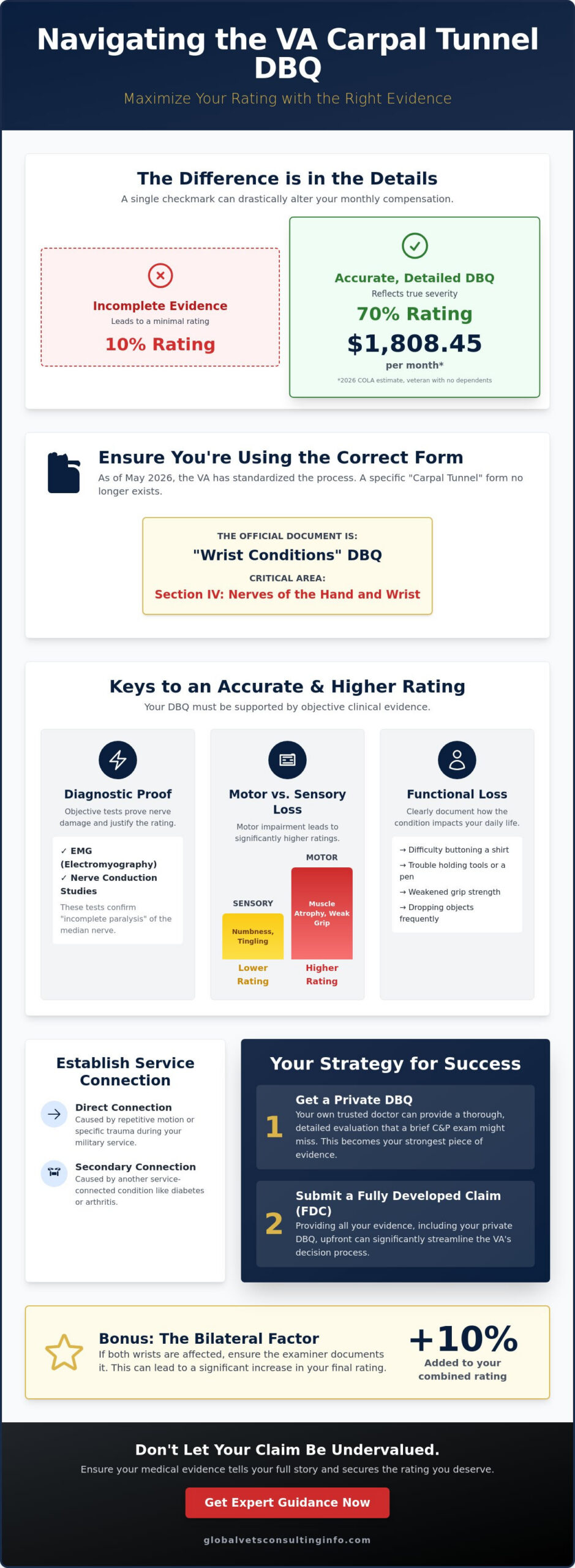
A single checkmark in the wrong box on your dbq for carpal tunnel syndrome can be the difference between a 10% rating and a 70% rating for your dominant hand. You’ve likely spent years dealing with “pins and needles” or a weakened grip, only to have a C&P examiner downplay your symptoms because the clinical language didn’t match your reality. It’s frustrating when your daily physical limitations aren’t captured accurately, especially since the 2026 COLA adjustment means a 70% rating now provides $1,808.45 in monthly compensation for a veteran with no dependents.
We believe that your medical documentation should tell the full story of your service. This guide will show you exactly how to navigate the DBQ process so your evidence reflects the true severity of your condition. You’ll learn about the critical role of EMG and Nerve Conduction Studies. We’ll also explain how to document functional loss, why the VA now requires the “Wrist Conditions” DBQ rather than a neurological form, and how to submit a Fully Developed Claim with confidence.
Key Takeaways
- Understand how the “Wrist Conditions” DBQ acts as a clinical roadmap. It translates your daily functional limitations into the specific language required for a fair VA rating.
- Identify the critical findings, such as muscle atrophy or motor disturbances, that often trigger a higher disability percentage than simple numbness.
- Learn the precise steps to prepare your medical history and coordinate with a provider who understands meticulous VA documentation standards.
- Discover how submitting a completed dbq for carpal tunnel syndrome as part of a Fully Developed Claim can streamline the decision process.
- Explore the process for using new evidence to secure a va disability rating increase if your condition has worsened over time.
Understanding the Carpal Tunnel Syndrome DBQ (Form 21-0960M-15)
The dbq for carpal tunnel syndrome serves as a standardized bridge between your clinical diagnosis and the VA’s rating schedule. It’s more than just a medical checklist; it’s the primary tool used to evaluate median nerve compression. By providing a structured format, the questionnaire translates your numbness and physical limitations into a language the VA Rater can use to assign a disability percentage. A thorough understanding carpal tunnel syndrome and its impact on your daily life is essential before you walk into an exam room.
One common point of confusion is finding the correct paperwork. As of May 2026, the VA evaluates carpal tunnel syndrome using the “Wrist Conditions” DBQ. You won’t find a standalone form labeled specifically for the median nerve. Instead, examiners focus on Section IV, which covers the nerves of the hand and wrist. Ensuring your documentation meets the 2026 standards under 38 CFR § 4.124a is vital for an accurate outcome. While the form number 21-0960M-15 is often cited in historical records, the current “Wrist” form is what your doctor must complete today.
To better understand this concept, watch this helpful video:
Direct vs. Secondary Service Connection in the DBQ
Establishing service connection is a step-by-step process. For a direct connection, you must document how repetitive motions or specific trauma during your active duty service caused the nerve damage. However, many veterans qualify through secondary service connection. This occurs when an existing service-connected condition, like diabetes or rheumatoid arthritis, leads to carpal tunnel syndrome. The DBQ must clearly show this “nexus” to ensure the VA recognizes the relationship between your conditions and your military service.
Why a Private DBQ is a Critical Piece of Evidence
Relying solely on a 15-minute C&P exam often leads to incomplete evidence. A private DBQ allows your own doctor to spend the necessary time documenting the full extent of your muscle atrophy or grip strength loss. This comprehensive view provides the objective evidence required to override errors made during rushed government exams. Including a private evaluation is a strategic way to follow the va disability claims process step by step, helping you submit a Fully Developed Claim (FDC) that is ready for a decision. When you submit your own dbq for carpal tunnel syndrome, you take control of the clinical narrative.
Key Clinical Requirements for an Accurate Carpal Tunnel Rating
The VA doesn’t rely solely on your description of symptoms; they require objective clinical data to justify a specific rating. Your dbq for carpal tunnel syndrome is anchored by diagnostic testing that proves the extent of nerve damage. Specifically, the rater looks for “incomplete paralysis” of the median nerve, which is defined as a state where the nerve is damaged and functional ability is impaired, but some motor or sensory signals still pass through. Without objective evidence to support this, your claim may be undervalued or denied.
Distinguishing between sensory and motor disturbances is vital for a fair evaluation. While numbness and tingling are common, the VA assigns higher ratings when there is evidence of motor loss, such as muscle atrophy in the thumb or a significant loss of grip strength. According to Johns Hopkins Medicine on Carpal Tunnel, the condition often progresses from mild tingling to permanent weakness if left unaddressed. Documenting these advanced symptoms on your DBQ is the most effective way to secure a rating that matches your level of impairment.
Don’t overlook the bilateral factor during your exam. If both of your wrists are affected, the VA applies an additional 10% to your combined rating before the final rounding occurs. Ensuring the examiner evaluates both hands can result in a significant increase in your overall compensation. If you need help understanding how these clinical findings impact your specific case, reviewing musculoskeletal claims education can provide the clarity you need before your appointment.
Documenting Functional Loss and Range of Motion
Your doctor must record “pain on motion” and “functional loss” during repetitive use. The VA requires the examiner to consider how your wrist performs during a flare-up, not just how it feels during a five-minute exam. If the DBQ only captures your status on a “good day,” it fails to reflect the true impact of the condition on your ability to work or perform daily tasks.
The Role of Nerve Conduction Studies (NCS)
Nerve Conduction Studies (NCS) and Electromyography (EMG) are the primary anchors for your claim. These tests provide the “mild, moderate, or severe” labels that determine your percentage. You must ensure your private physician includes the specific interpretation of these test results directly within the dbq for carpal tunnel syndrome to prevent the VA from defaulting to a lower rating tier.
How to Get Your Carpal Tunnel DBQ Completed Properly
Getting your dbq for carpal tunnel syndrome filled out correctly requires a methodical approach similar to a military briefing. You shouldn’t walk into a medical office expecting a provider to instinctively know every detail of your service history. Start by gathering all existing medical records, specifically any previous diagnoses of median nerve compression and the Nerve Conduction Studies mentioned in previous sections. Once your evidence is organized, schedule an evaluation with a provider who is familiar with the specific documentation requirements used by the VA. You can download the necessary paperwork directly from the Official VA DBQ Forms portal to bring with you.
During the appointment, review the form sections with your doctor to ensure no functional impacts are missed. Small details, like difficulty buttoning a shirt or a weakened grip while driving, are clinical indicators of severity. Finally, ensure the “Nexus” or service connection is clearly addressed. If the link between your military service and your condition isn’t explicitly stated, the VA may deny the claim despite the severity of your symptoms. If you feel uncertain about this step, our C&P examination preparation education provides the tools you need to communicate effectively with your examiner.
Finding the Right Medical Professional
Choosing the right doctor is a critical decision. Many general practitioners aren’t experienced with the what is a dbq framework, which often leads to missed neurological nuances. A specialist who understands peripheral nerve conditions is better equipped to document the specific levels of “incomplete paralysis” required for a proper rating. Using a provider who recognizes the importance of meticulous documentation can prevent common errors that lead to a denied claim.
Preparation for the Physical Evaluation
Your preparation starts weeks before you reach the clinic. Track your symptoms in a “pain journal” to provide your doctor with accurate, long-term data. This helps the examiner document the “DeLuca” criteria, which require the VA to consider how fatigue, incoordination, and pain impact your physical abilities. The dbq for carpal tunnel syndrome must reflect how your hands function during repetitive use, not just how they feel during a brief, static exam.
Submitting Your Evidence and Maximizing Your Rating
Submitting your dbq for carpal tunnel syndrome as part of a Fully Developed Claim (FDC) is the most effective way to expedite the VA’s decision-making process. By providing all medical evidence upfront, you eliminate the need for the VA to search for external records, which often leads to months of delays. This proactive approach ensures the rater has everything they need to apply the 2026 COLA adjusted rates, such as the $1,132.90 monthly payment for a 50% disability rating for a veteran with no dependents.
If your symptoms have progressed since your last evaluation, you can use a new dbq for carpal tunnel syndrome to apply for a va disability rating increase. This documentation acts as clinical proof that your condition has worsened, requiring a higher percentage under Diagnostic Code 8515. Before you submit your packet, verify that the form is signed, dated, and clearly displays the clinician’s credentials. An unsigned form is a common cause for administrative rejection, regardless of how severe your medical findings are.
Your “Statement in Support of Claim” should act as a narrative mirror to the medical findings in your DBQ. If the doctor notes severe muscle atrophy or a weakened grip, your personal statement should describe how these physical limitations prevent you from performing daily tasks or maintaining employment. When your personal story aligns perfectly with the clinical data, it builds a cohesive case that is difficult to dispute.
Common DBQ Errors That Lead to Denials
The most frequent error is the omission of objective test results. Even if a doctor describes your symptoms as severe, the VA may deny the claim if the actual NCS or EMG reports aren’t included in the final submission. Additionally, ensure there is no inconsistent reporting between your DBQ and your military service records. If your records mention a right-hand injury but the DBQ only focuses on the left, it creates a discrepancy that can stall your claim.
Next Steps for Veterans with Multiple Conditions
It’s important to consider if your carpal tunnel is actually a secondary symptom of a neck or back condition, such as cervical radiculopathy. Nerve issues in the spine often manifest as numbness in the hands, which could lead to multiple service-connected ratings. At Global Vets Consulting, we focus on streamlining the evidence-gathering process for these complex, multi-condition claims. Our goal is to ensure your documentation is meticulous, helping you secure the benefits you’ve earned through your service.
Secure the Benefits Your Service Has Earned
You now have a clear roadmap for ensuring your medical evidence meets the VA’s 2026 standards. By focusing on the “Wrist Conditions” form and prioritizing objective results from Nerve Conduction Studies, you provide the rater with the clinical proof needed for an accurate evaluation. It’s vital to remember that your personal narrative regarding functional loss and flare-ups must align with the clinical data captured by your provider. This synergy between your daily reality and medical documentation is what creates a strong, successful claim.
Completing a comprehensive dbq for carpal tunnel syndrome is a significant milestone in your journey toward a fair rating. As a veteran-owned and operated resource, we specialize in providing expert guidance and standardized forms designed for strict VA compliance. Our streamlined evidence-gathering process is built to give you peace of mind and a predictable path forward. Get the professional DBQ documentation you need for your VA claim today.
You’ve already done the hard work of serving your country. Now, let’s make sure the system works for you. With the right documentation in place, you can move forward with confidence and the steady assurance that your health and contributions are finally being recognized.
Frequently Asked Questions
Can I use a private doctor to fill out my carpal tunnel DBQ?
Yes, you can certainly use a private physician to complete your documentation. The VA provides public versions of the “Wrist Conditions” form specifically so your own doctor can record your symptoms. This often results in a more comprehensive evaluation than a standard C&P exam. Your doctor must be thorough and include all relevant diagnostic results to ensure the rater has a complete picture of your health.
What is the highest VA rating for carpal tunnel syndrome?
The maximum rating for carpal tunnel syndrome is 70% for your dominant hand and 60% for your non-dominant hand. These percentages are assigned under Diagnostic Code 8515 when there is complete paralysis of the median nerve. Most veterans receive ratings between 10% and 50% based on whether their impairment is classified as mild, moderate, or severe incomplete paralysis. Meticulous documentation is the key to securing the highest possible tier.
Is a Nerve Conduction Study (NCS) required for a carpal tunnel claim?
A Nerve Conduction Study is not legally mandatory, but it’s the most critical piece of evidence for a successful dbq for carpal tunnel syndrome. The VA rater looks for objective clinical data to distinguish between different levels of nerve damage. Without the results of an NCS or EMG, the examiner has no way to prove the severity of your condition. This often leads to a lower rating than your symptoms actually deserve.
How does the bilateral factor affect my carpal tunnel rating?
The bilateral factor increases your combined disability rating by adding an extra 10% if both wrists are service-connected. This adjustment is applied to the combined percentage of both hands before the VA rounds the final number. It accounts for the significantly higher level of disability that occurs when a veteran loses fine motor skills and grip strength in both hands simultaneously. Make sure your examiner evaluates both sides during your appointment.
What happens if my C&P exam contradicts my private DBQ?
When a C&P exam conflicts with your private medical evidence, the VA is required to evaluate which report is more “probative,” or more convincing. A private dbq for carpal tunnel syndrome often prevails if it’s backed by more detailed testing and a longer history of treatment. You should review both reports carefully. If the C&P exam is missing key data like your NCS results, you can point out these inaccuracies in a formal statement to the VA.

Article by
Willie Daniel
Willie Daniel is the Founder and Chief Executive Officer (CEO) of Global Vets Consulting (GVC) – National Veterans Disability Services, a veteran-led educational and medical evidence support organization dedicated to helping veterans better understand VA disability rating increases, DBQ medical evidence, secondary claims education, and C&P examination preparation.
He is a retired U.S. Army Medical Service Corps Officer with more than 27 years of honorable military service, a decorated Iraq combat veteran, and a retired federal official with the U.S. Department of Veterans Affairs. Throughout his military and federal career, Willie Daniel served in leadership, healthcare administration, operational, and veteran-support roles focused on improving services and support systems for servicemembers, veterans, and their families.
Drawing from decades of military leadership, healthcare administration, veteran advocacy, and federal government experience, Willie Daniel brings a practical, veteran-centered perspective to Global Vets Consulting’s educational articles, AI-powered veteran resources, video education initiatives, and outreach programs. His experience navigating military systems, medical documentation processes, and veteran-related administrative operations provides valuable insight into many of the challenges veterans face when seeking to better understand VA disability rating criteria, medical evidence, documentation strategies, and secondary condition education.
Through GVC’s “Veterans Helping Veterans” mission, his focus is on delivering clear, educational, and easy-to-understand information designed to empower veterans with knowledge, resources, and educational tools that may help them make more informed decisions regarding their individual VA disability journeys.
The information provided through GVC is intended for educational and informational purposes only and should not be considered legal or medical advice.
Disclaimer
Disclaimer: Global Vets Consulting, LLC (“GVC”) is a veteran-led educational and medical evidence support organization. GVC is not a law firm, is not a Veterans Service Organization (VSO), and is not affiliated with the U.S. Department of Veterans Affairs (VA) or any government agency.
Global Vets Consulting does not provide legal advice, medical advice, medical treatment, or healthcare services. GVC does not prepare, file, or submit VA disability claims on behalf of veterans. All information provided through this website, blog articles, videos, educational materials, AI tools, dashboards, templates, and communications is intended solely for general educational and informational purposes.
Veterans are encouraged to consult with accredited representatives, licensed attorneys, qualified medical providers, or Veterans Service Organizations regarding their specific legal, medical, or VA-related matters. VA disability decisions, ratings, and outcomes are determined solely by the U.S. Department of Veterans Affairs based on applicable laws, regulations, medical evidence, and individual circumstances. Past results do not guarantee future outcomes.