
Receiving a VA denial letter isn’t the end of your journey. It’s actually the first clear look at the VA’s playbook for how you can eventually win. It’s incredibly disheartening to open that envelope only to find your va claim denied insufficient medical evidence after you’ve spent months waiting for a decision. You likely feel like the C&P examiner didn’t listen to a word you said, or perhaps you’re anxious about the one-year deadline to protect your effective date. We understand the frustration of feeling like a number in a system that doesn’t see the full reality of your service-connected conditions.
The good news is that a denial for lack of evidence is often the most straightforward type of rejection to overturn if you have a precise strategy. In this 2026 recovery plan, you’ll discover how to turn that letter into a roadmap for success by bridging medical gaps with professional documentation. We’ll explain exactly what “new and relevant” evidence means in the current landscape, where the average claim takes about 78.6 days to process. You’ll learn how a properly executed Disability Benefits Questionnaire (DBQ) can provide the clarity the VA requires to finally grant the disability rating you’ve earned.
Key Takeaways
- 📑 Learn to use the “Reasons for Decision” in your denial letter as a specific checklist to identify exactly which medical gap caused the rejection.
- 🛣️ Discover why the Supplemental Claim lane is the superior choice for a va claim denied insufficient medical evidence, allowing you to submit “New and Relevant” documentation.
- 🩺 Understand how professional Disability Benefits Questionnaires (DBQs) bridge the gap between your physical or mental symptoms and the VA’s technical rating requirements.
- 🇺🇸 Gain a clear, step-by-step recovery plan for 2026 to secure the independent medical evidence needed to turn a denial into a successful rating increase.
Deciphering Your VA Decision Letter: The Roadmap to Success 📑
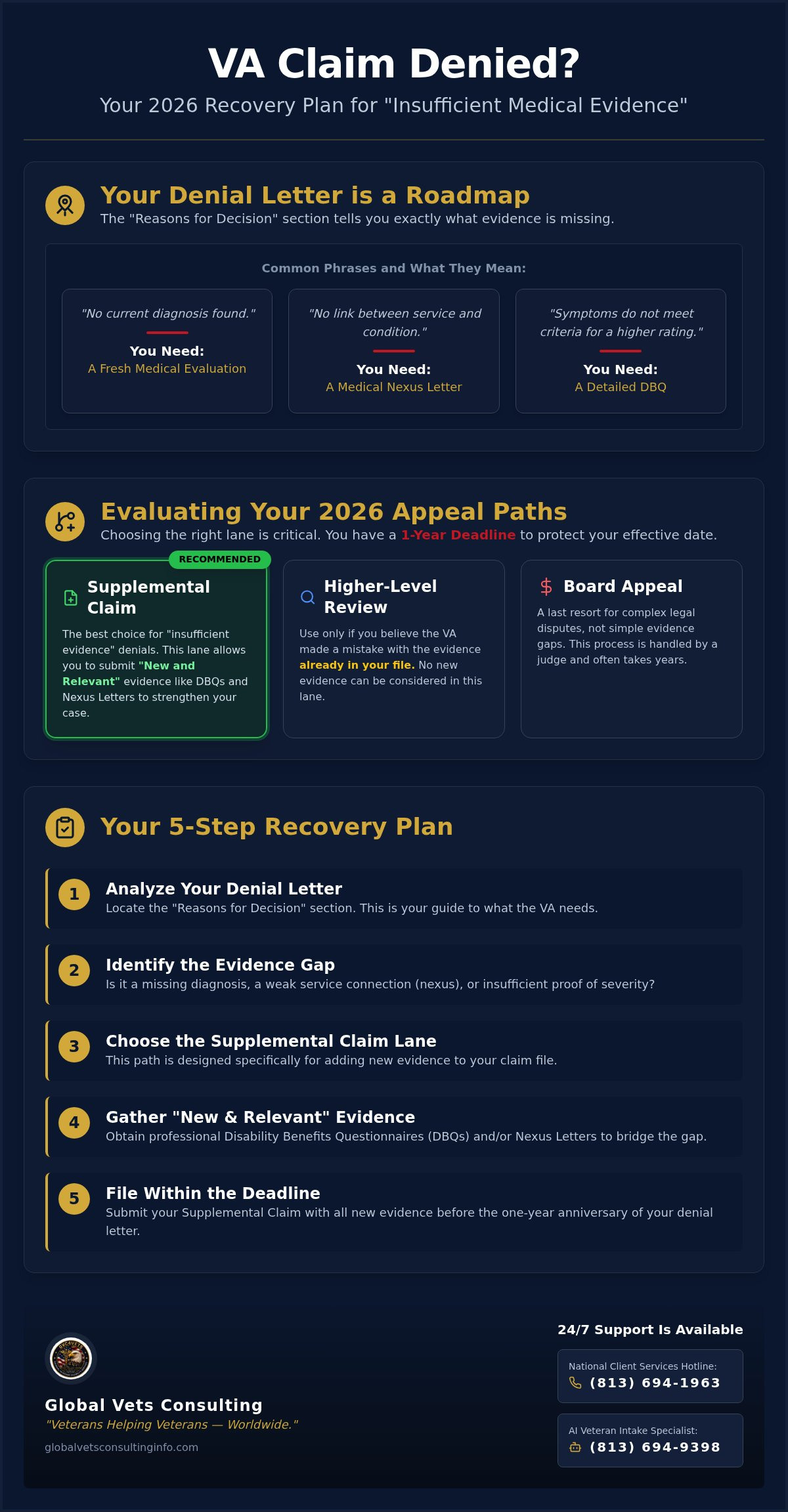
Opening a VA denial letter is a heavy moment, but it’s vital to look past the “no.” That letter contains the exact blueprint for your eventual victory. When your va claim denied insufficient medical evidence, the VA rater is essentially telling you what’s missing. Instead of a door closing, think of it as a checklist. You need to focus your attention on the “Reasons for Decision” section. This part explains the rater’s logic and highlights whether the gap is a missing diagnosis, a lack of service connection, or a disagreement on the severity of your symptoms.
Before you assume you need a mountain of new paperwork, check the “Evidence” list on the first few pages. It’s not uncommon for service treatment records or private medical files to be overlooked during the initial review. If you see that your key documents weren’t even listed, your strategy changes. However, if everything was reviewed and you were still denied, it’s time to build a stronger medical foundation. Identifying whether the VA missed existing evidence or if you truly need to gather new documentation is the first step in your 2026 recovery plan.
Common ‘Insufficient Evidence’ Phrases in 2026
VA raters often use specific language that points to the exact solution you need. If you see “No current diagnosis found,” it means your records don’t clearly state you have the condition today. You need a fresh medical evaluation. If the letter says “No link between service and condition,” you’re missing a Medical Nexus. Finally, “Symptoms do not meet the criteria for a higher rating” is a clear sign that your current documentation doesn’t reflect how much your condition affects your life. This often requires a more detailed DBQ to capture the true severity.
Identifying the ‘Evidence Gap’
Determining the nature of the gap is your first actionable step. If the VA admits you have a diagnosis but denies service connection, your focus should be on a Nexus Letter or an Independent Medical Opinion. If your VA claim was denied for lack of evidence, you must decide if the problem is medical or administrative. An administrative gap means they missed a form; a medical gap means you need professional documentation to prove the “Big Three”: a diagnosis, an in-service event, and the link between them.
Evaluating Your 2026 Appeal Paths: Which Lane is Right for You? 🛣️
Once you’ve identified the gap in your decision letter, you must choose an appeal lane. You have exactly one year from the date on your letter to file. Missing this deadline means losing your effective date and potential backpay. For most veterans who find their va claim denied insufficient medical evidence, the Supplemental Claim lane is the most effective choice because it allows you to fix the record with updated documentation.
Choosing the wrong lane can result in months of wasted time. If you file a Higher-Level Review when you actually need to submit new doctor’s notes, the VA will simply deny you again because they can’t look at new proof in that lane. You must be strategic about where you place your case to ensure the fastest possible resolution and avoid the backlog. If your va claim denied insufficient medical evidence notification arrived recently, don’t panic. You have time to build a stronger case.
Supplemental Claims vs. Higher-Level Review
The Supplemental Claim is the primary path for submitting “new and relevant” evidence. It’s the only way to introduce a professional DBQ or a new medical nexus to counter a negative C&P exam. In contrast, a Higher-Level Review (HLR) is a closed-record review. You should use HLR only if the evidence was already in your file and the rater simply made a mistake. Finally, a Board Appeal involves a Veterans Law Judge. It often takes years and is usually reserved for complex legal disputes rather than evidence gaps.
The 2026 Appeal Timeline
In the current 2026 environment, Supplemental Claims are processed much faster than Board Appeals. While the VA processed over 2 million disability claims by June 2026, the speed of your appeal depends heavily on the lane you choose. Understanding the VA disability claims process step by step helps you see how these timelines impact your benefits. If you need clarity on your specific denial, you can connect with an intake specialist to discuss your evidence strategy and start your recovery plan today.
How Professional DBQs Overcome a Denied Appeal 🩺
A Disability Benefits Questionnaire (DBQ) is the precise tool VA raters use to translate your physical or mental symptoms into a disability percentage. When you find your va claim denied insufficient medical evidence, it’s usually because your existing records lack the specific data points required by the VA’s rating schedule. Private DBQs serve as a critical bridge. They ensure your symptoms are documented in the exact language the VA understands, preventing that “insufficient” label from sticking during your appeal. By using standardized forms, you can align your private medical history with the VA’s technical requirements.
Global Vets Consulting specializes in medical evidence education and DBQ preparation. We understand that the difference between a 10% and 70% rating often comes down to how a single box is checked on a form. Our focus is on ensuring your documentation is meticulous and accurate. This level of detail provides the rater with the clarity they need to make a favorable decision without requesting more “development” of the claim.
Winning with ‘New and Relevant’ Evidence
To win a Supplemental Claim in 2026, your evidence must be both “new” and “relevant.” “New” means the VA hasn’t seen it before; “relevant” means it directly addresses the reason you were denied. A professional DBQ is often the gold standard for this. It provides a current, comprehensive snapshot of your condition that wasn’t part of your initial file. To understand how these forms work, read our guide on what is a dbq. This documentation is the key to proving the current severity of your condition.
Countering a Negative C&P Examination
Many veterans walk out of a Compensation and Pension (C&P) exam feeling unheard. If an examiner spent only 10 minutes with you and wrote a report that downplays your daily reality, a detailed private DBQ provides a necessary second opinion. Professional documentation highlights symptoms that a rushed examiner might have missed or ignored. This allows you to present a complete picture of your health. If you’re ready to bridge the evidence gap, contact our veteran intake specialists to start your medical evidence education today.
Step-by-Step: Taking Action After a Denial 🇺🇸
Receiving a denial letter is a punch in the gut, but it’s also your starting line. If you’ve had a va claim denied insufficient medical evidence, you need a systematic approach to turn that “no” into a “yes.” Following a structured recovery plan ensures you don’t miss critical deadlines or leave earned money on the table. In 2026, the VA is processing claims at a record pace, so having your evidence ready for a Supplemental Claim is more important than ever.
- Step 1: Grab a highlighter and comb through the “Reasons for Decision” in your VA denial letter. You’re looking for the specific missing link, whether it’s a missing nexus or a current diagnosis.
- Step 2: Secure a professional DBQ that addresses the exact medical evidence the rater found lacking. This documentation serves as the “New and Relevant” evidence required to reopen your claim.
- Step 3: File VA Form 20-0995, which is the Decision Review Request for a Supplemental Claim. Ensure your new DBQ is attached and clearly references the conditions being appealed.
- Step 4: Track your claim through the 2026 VA portal. Stay in consistent contact with your consultant to ensure no additional development is requested by the rater.
Protecting Your Backpay and Effective Date
Your effective date is your most valuable asset in the claims process. Never let that one-year appeal window close. If you miss it, you lose the potential for thousands of dollars in backpay, as your new effective date will reset to whenever you refile. If you’re seeking a VA disability rating increase, the appeal process is your chance to perfect your medical evidence and secure the maximum benefit you’ve earned through your service.
Contact Global Vets Consulting for Support
You don’t have to navigate this bureaucratic maze alone. Our 24/7 National Client Services Hotline is standing by to help you navigate your next move. 📞 You can also utilize our 24/7 AI Veteran Intake Specialist to start your DBQ process immediately. 🌐 We are Veterans Helping Veterans. We know the system because we’ve lived it, and we’re committed to helping you bridge the evidence gap with meticulous documentation. 🇺🇸
Secure Your Disability Rating with Professional Evidence 🇺🇸
A denial doesn’t mean your claim is dead; it just means it’s time to refine your strategy. By using your decision letter as a checklist and choosing the Supplemental Claim lane, you can directly address the medical gaps identified by the rater. In the current 2026 landscape, speed and precision are vital. A professional DBQ provides the standardized, high-quality data that prevents your claim from being stalled by an “insufficient” label. We focus on specialized DBQ and medical evidence education to ensure your documentation meets the VA’s rigorous standards.
Don’t let an evidence gap stop you from receiving the compensation you’ve earned. If your va claim denied insufficient medical evidence notification has left you feeling stuck, our team is ready to help you move forward. As a veteran-owned and operated consulting service, we understand the challenges of the system and the importance of meticulousness. Don’t let an evidence gap stop you. Contact Global Vets Consulting today for professional DBQ support. Our 24/7 National Client Services Hotline is available whenever you’re ready to take the next step. You’ve served your country; now let us help you secure your future.
Frequently Asked Questions
Can I submit a private DBQ if I already had a VA C&P exam?
Yes, you can submit a private DBQ as part of a Supplemental Claim to counter a negative or insufficient C&P exam. The VA is required to consider all evidence in your file, including independent medical opinions. A detailed private DBQ often provides the specific medical data that a rushed examiner might have missed, helping to resolve cases where a va claim denied insufficient medical evidence occurred initially.
What is considered ‘new and relevant’ evidence for a VA appeal in 2026?
New evidence is information the VA hasn’t previously considered, while relevant evidence is information that tends to prove or disprove a matter at issue in your claim. For a 2026 Supplemental Claim, this could include a fresh DBQ, a nexus letter from a medical professional, or new service treatment records. This evidence must directly address the specific reasons for denial listed in your decision letter.
How long do I have to appeal a denied VA claim before losing backpay?
You have exactly one year from the date on your VA decision letter to file a Supplemental Claim or Higher-Level Review to preserve your effective date and backpay. If you miss this one-year deadline, your effective date will reset to the date of your new filing. Protecting this window is critical for securing the disability compensation rates confirmed for 2026, such as the $3,938.58 monthly rate for a 100% disability rating.
Can I file a Supplemental Claim and a Higher-Level Review at the same time?
No, you cannot seek two different types of reviews for the same issue simultaneously. You must choose one “lane” at a time for each specific condition. However, if you receive a denial after a Higher-Level Review, you can then file a Supplemental Claim with new evidence. This structured approach allows you to systematically address why your va claim denied insufficient medical evidence by introducing professional documentation after a closed-record review fails.
What happens if my Supplemental Claim is also denied by the VA?
If your Supplemental Claim is denied, you still have options to continue your appeal. You can file another Supplemental Claim if you have more new and relevant evidence, or you can request a Higher-Level Review of that new decision. You also have the option to take your case to the Board of Veterans’ Appeals. As long as you file your next appeal within one year of the new denial, you keep your original effective date active.
Article by
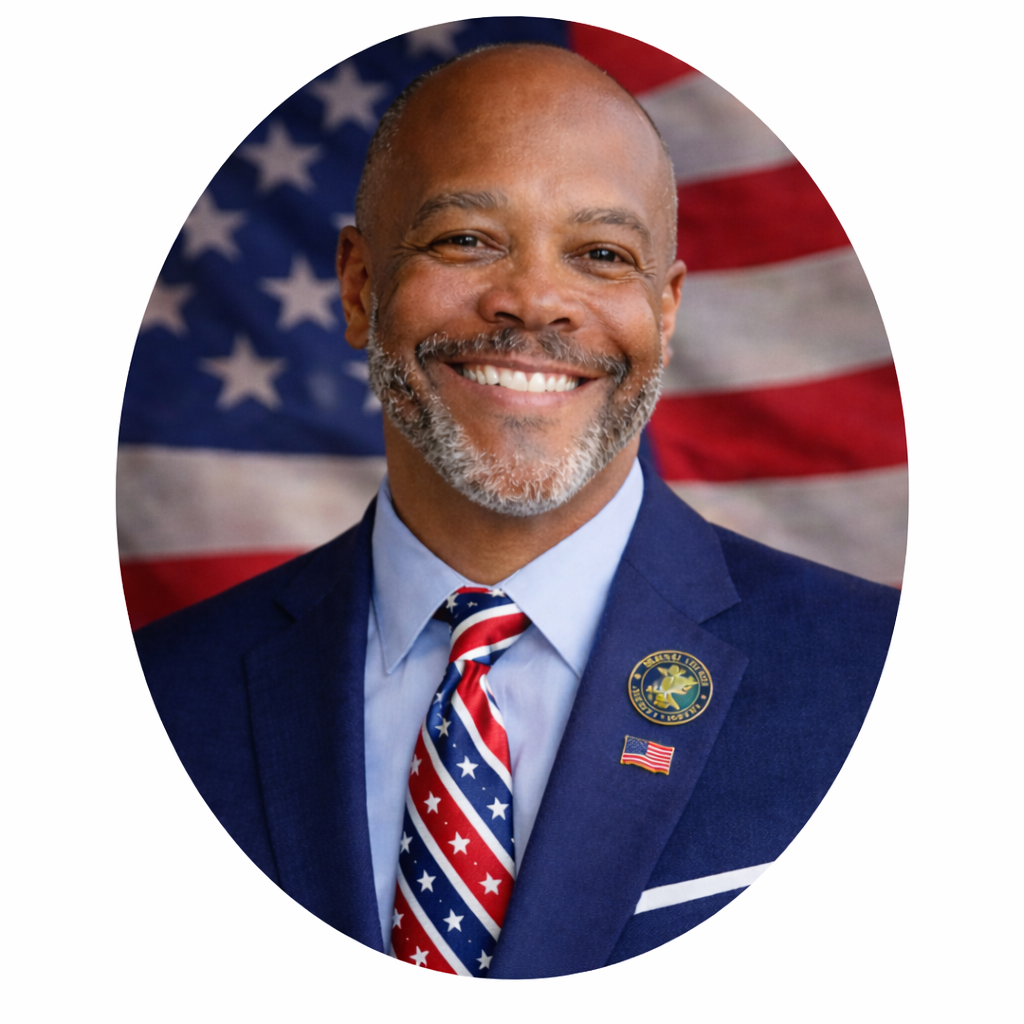
Willie Daniel
Willie Daniel is the Founder and Chief Executive Officer (CEO) of Global Vets Consulting (GVC4Vets) – National Veterans Disability Services, a veteran-led educational and medical evidence support organization dedicated to helping veterans better understand VA disability rating increases, DBQ medical evidence, secondary claims education, and C&P examination preparation.
He is a retired U.S. Army Medical Service Corps Officer with more than 27 years of honorable military service, a decorated Iraq combat veteran, and a retired federal official with the U.S. Department of Veterans Affairs. Throughout his military and federal career, Willie Daniel served in leadership, healthcare administration, operational, and veteran-support roles focused on improving services and support systems for servicemembers, veterans, and their families.
Drawing from decades of military leadership, healthcare administration, veteran advocacy, and federal government experience, Willie Daniel brings a practical, veteran-centered perspective to Global Vets Consulting’s educational articles, AI-powered veteran resources, video education initiatives, and outreach programs. His experience navigating military systems, medical documentation processes, and veteran-related administrative operations provides valuable insight into many of the challenges veterans face when seeking to better understand VA disability rating criteria, medical evidence, documentation strategies, and secondary condition education.
Through GVC’s “Veterans Helping Veterans” mission, his focus is on delivering clear, educational, and easy-to-understand information designed to empower veterans with knowledge, resources, and educational tools that may help them make more informed decisions regarding their individual VA disability journeys.
The information provided through GVC is intended for educational and informational purposes only and should not be considered legal or medical advice.
Disclaimer
Disclaimer: Global Vets Consulting, LLC (“GVC”) is a veteran-led educational and medical evidence support organization. GVC is not a law firm, is not a Veterans Service Organization (VSO), and is not affiliated with the U.S. Department of Veterans Affairs (VA) or any government agency.
Global Vets Consulting does not provide legal advice, medical advice, medical treatment, or healthcare services. GVC does not prepare, file, or submit VA disability claims on behalf of veterans. All information provided through this website, blog articles, videos, educational materials, AI tools, dashboards, templates, and communications is intended solely for general educational and informational purposes.
Veterans are encouraged to consult with accredited representatives, licensed attorneys, qualified medical providers, or Veterans Service Organizations regarding their specific legal, medical, or VA-related matters. VA disability decisions, ratings, and outcomes are determined solely by the U.S. Department of Veterans Affairs based on applicable laws, regulations, medical evidence, and individual circumstances. Past results do not guarantee future outcomes.