

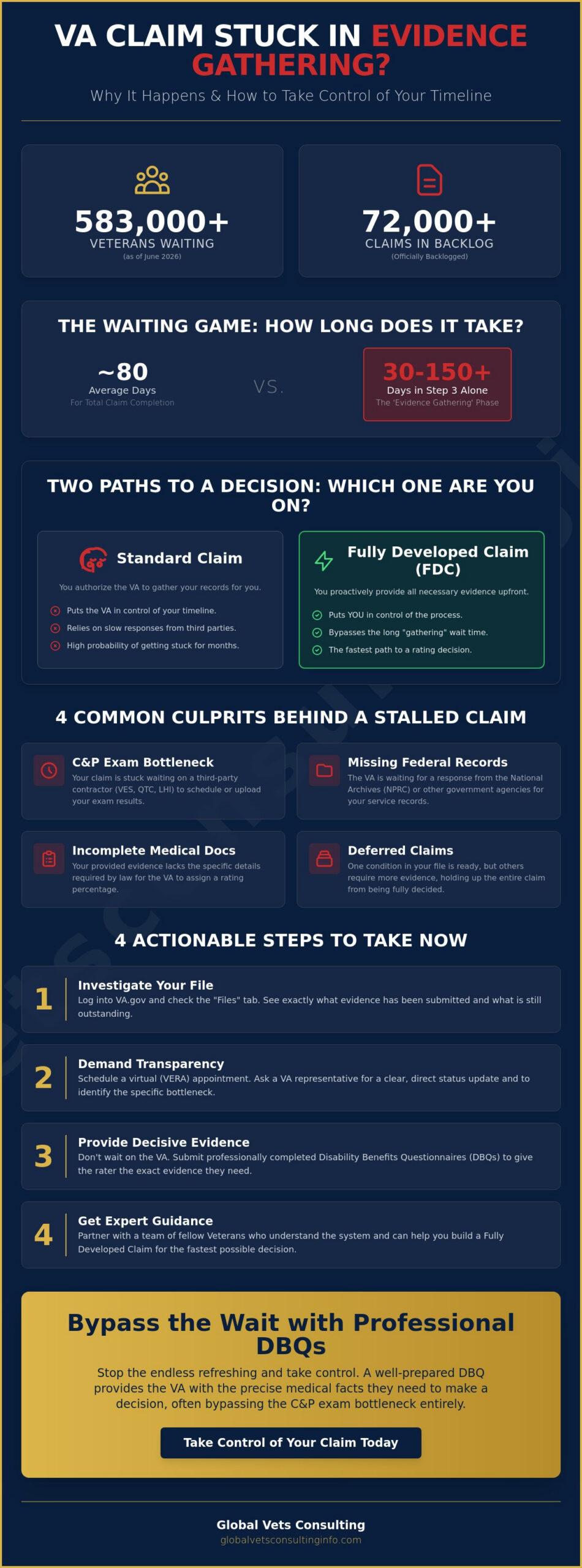
Did you know that as of June 2026, over 583,000 veterans are currently waiting on a disability decision, with more than 72,000 claims officially considered part of the rating backlog? While the average claim completion time is currently around 80 days, it’s exhausting to check the portal daily only to find your va claim stuck in evidence gathering for months on end. We understand the financial stress and the lack of transparency that comes with this waiting game. You’ve done the hard work of serving. Now, you deserve a clear path forward, especially when you’re counting on a rating increase to help manage your family’s needs. 🇺🇸
In this guide, we’ll explain exactly why your claim is stalling in the evidence phase and show you the concrete steps to take for a faster decision. We’ll help you understand if your file is missing critical medical evidence or if you need to refine your documentation to meet the VA’s current scrutiny standards. We’ll also provide a roadmap to help move your claim into the “Preparation for Decision” phase so you can finally access the benefits you’ve earned.
Key Takeaways
- Identify where you stand in the VA’s 8-step claims process and why Step 3 is often the most time-consuming phase.
- Pinpoint the specific reasons why a va claim stuck in evidence gathering often involves backlogged exams or missing federal records.
- Learn how to navigate the ‘Files’ tab on VA.gov and use VERA appointments to gain a clear, transparent view of your claim’s status.
- Explore how professional Disability Benefits Questionnaires (DBQs) can provide the precise medical evidence needed to bypass lengthy wait times and move toward a decision.
Understanding the VA Evidence Gathering, Review, and Decision Phase
Step 3 of the VA’s 8-step claims process is where the heavy lifting happens. This is the stage where the Veterans Benefits Administration (VBA) actively hunts for the service records and medical evidence needed to support your file. It’s also the period where the VA verifies the ‘Nexus’ between your military service and your current medical condition. Without a clear, documented connection, your claim cannot move forward toward a rating.
This phase is historically the longest part of the journey. In 2026, it’s common for this stage to last anywhere from 30 to 150 days. Because the VA is often waiting on third-party responses from private doctors or other government agencies, progress can feel non-existent. Finding your va claim stuck in evidence gathering is frustrating, but understanding the mechanics of this phase helps you identify exactly where the bottleneck is occurring. You aren’t just waiting on a person; you’re waiting on a paper trail.
Standard vs. Fully Developed Claims (FDC)
The path you choose when filing significantly impacts your wait time. In a standard claim, you authorize the VA to do the “legwork” of gathering your records. While this sounds easier, it puts the VA in control of your timeline. They must request records from the National Archives or private providers, which often leads to your va claim stuck in evidence gathering while they wait for a response that might take months to arrive.
Alternatively, a Fully Developed Claim (FDC) allows you to take charge of the process. By providing all necessary medical evidence, DBQs, and nexus letters upfront, you tell the VA you have no more evidence to submit. This allows you to skip the long “gathering” wait and move straight to review. For a detailed breakdown of every stage, you can review our guide on the VA disability claims process step by step. Taking this proactive approach is often the best way to secure a faster decision and a fair rating.
Why Your VA Claim Stalls: The Common Culprits
Seeing your va claim stuck in evidence gathering is often the result of administrative friction rather than a lack of merit. While the official VA claim process is designed to be sequential, several external factors can halt progress for weeks or months. Most delays occur because the VA is waiting on a third party to provide a piece of the puzzle that is outside of their immediate control.
The C&P Exam Bottleneck
The VA relies heavily on third-party contractors like VES, QTC, or LHI to conduct Compensation and Pension (C&P) examinations. If these vendors have a backlog in your specific area, your claim sits idle. You might see a status update stating a reviewer is examining your new evidence. This sounds like progress, but it often means the VA is merely waiting for a contractor to confirm an appointment date. Until that medical data is uploaded, the rater cannot move your file to the next stage. Understanding how to navigate C&P examination preparation education can help you feel more confident when that call finally comes.
Deferred Claims and Partial Ratings
The VA sometimes encounters a situation where one condition in your claim is ready for a decision, but another requires more development. In these cases, your entire file might appear as a va claim stuck in evidence gathering because of a “deferral.” The VA has the authority to issue a partial rating, which provides you with compensation for clear-cut conditions while the others remain under review. You can check the “Status Details” in your VA.gov portal to see if specific items have been deferred. Other common culprits include:
- Missing Federal Records: The VA is waiting on responses from the National Personnel Records Center (NPRC) or other government agencies.
- Incomplete Medical Documentation: Your records may lack the specific technical details required to assign a rating percentage according to the law.
When the VA doesn’t have the exact data points they need, they won’t guess. They’ll simply wait until the evidence arrives, regardless of how long it takes.
4 Actionable Steps to Take When Your Claim is Stuck
If your va claim stuck in evidence gathering is causing you stress, it’s time to stop checking the portal and start taking action. You’ve waited long enough for the system to work on its own. Taking a proactive approach is the best way to move your file from a dusty digital shelf to a rater’s desk. 🇺🇸
First, log into VA.gov and navigate to the ‘Files’ tab. This area reveals exactly what the VA is waiting for. If you see a ‘tracked item’ that has been open for 30 days, don’t wait for the VA to follow up. You can obtain that medical evidence yourself and upload it directly to the portal, preventing a va claim stuck in evidence gathering from dragging on indefinitely. This simple act can shave weeks off your timeline.
The VERA Advantage
While many veterans call the standard 1-800 number, the real advantage lies in scheduling a VERA (Visitor Engagement Reporting Application) appointment. VERA connects you with specialists at a Regional Office who can view internal ‘suspense dates’ and detailed rater notes that hotline operators can’t access. When you prepare for your 📞 call, ask specifically if there are any ‘overdue’ requests or if your claim is ‘Ready for Decision’ but hasn’t been picked up yet. This level of transparency is vital for understanding the true status of your claim.
When to Click ‘Ask for a Claim Decision’
The ‘Ask for a Claim Decision’ button is a specific feature within the official VA claim process. It officially notifies the VA that you’ve submitted everything you intend to. But be careful. You should never click this button if you’re still waiting on a private DBQ or a nexus letter. If you tell the VA to decide now without that evidence, you’re likely setting yourself up for a lower rating or a denial. If you need help determining if your evidence is complete, check out our independent medical evidence education resources to verify your file’s strength.
How to Bypass the Wait with Professional DBQs
Most advice tells you that “patience” is your only tool while you wait for a decision. That isn’t true. While the VA works through its backlog, you can actively shorten your timeline by providing the exact technical data they need. A private Disability Benefits Questionnaire (DBQ) acts as a “skip the line” ticket because it provides the VA with specific clinical findings required to assign a rating percentage immediately. When you submit a completed DBQ, you’re handing the rater a finished product rather than a list of questions that require more research.
Finding your va claim stuck in evidence gathering is often a symptom of a file that lacks the specific jargon or measurements the VA rater looks for. To see how these forms function in the current 2026 landscape, you can review our comprehensive guide on What is a DBQ?. Providing high-quality documentation upfront is the most effective way to avoid the frustration of having a VA claim denied for lack of evidence after months of waiting.
The Power of Independent Medical Evidence
A private doctor’s assessment often carries significant weight because it’s based on a thorough review of your entire medical history. Unlike a C&P examiner who might only see you for a few minutes, independent medical evidence provides a deep dive into your specific symptoms and functional limitations. Global Vets Consulting streamlines this process for veterans nationwide by providing the educational resources and documentation support needed to present a clear case to the VA. 🇺🇸
Taking Control of Your Rating Increase
If your va claim stuck in evidence gathering involves a request for a rating increase, a new DBQ is the fastest path to a decision. It proves your condition has worsened using the VA’s own criteria, often reducing the need for the VA to schedule more exams. Don’t let administrative delays keep you from the benefits you’ve earned through your service.
🌎 Worldwide
📞 24/7 National Client Services Hotline
💻 GlobalVetsConsultingInfo.com
Take Command of Your VA Claim Timeline
Navigating the VA system requires more than just patience; it requires a strategic approach to medical evidence. By identifying the specific bottlenecks in the evidence phase and utilizing resources like VERA appointments, you can transform a passive waiting period into an active pursuit of your benefits. Your medical documentation is the most powerful tool you have to influence a rater’s decision. Don’t let your va claim stuck in evidence gathering sit idle when you have the power to provide the clarity the VA needs to move forward.
We’re here to help you bridge the gap between service and support. As a veteran-owned and operated team 🇺🇸, we specialize in DBQ documentation designed for accurate ratings. If you’re ready to move your claim toward a final decision, get your professional DBQ from Global Vets Consulting today. Our 24/7 National Client Services Hotline 📞 is standing by to provide immediate guidance on your documentation needs. You’ve earned these benefits through your service, and it’s time to secure the fair rating you deserve.
Frequently Asked Questions
How long does the VA evidence gathering phase take in 2026?
The VA evidence gathering phase in 2026 typically lasts between 30 and 150 days. Although the VA reported an average claim completion time of 80.7 days in April 2026, this specific stage remains the most unpredictable. Your wait time depends on how quickly the VA receives your service treatment records and medical documentation from outside sources like private doctors or the National Archives.
Can I submit more evidence while my claim is in the gathering stage?
You can definitely submit more evidence while your claim is in the gathering stage. Providing missing medical records or a private DBQ can help move your file forward and strengthen your case. Just keep in mind that submitting a large volume of new evidence might reset your claim’s internal review timeline because a representative must verify the new information before it reaches the rater for a final decision.
What does ‘A reviewer is examining your new evidence’ mean?
This status indicates that a VA representative is currently verifying the documents you uploaded or those received from a third party. It’s a technical check to ensure the evidence is complete and formatted correctly. While it shows your file is being handled, it’s a preliminary step before the claim moves to the “Preparation for Decision” phase where the actual rating percentage is determined. It doesn’t mean your rating is finalized yet.
Should I call the VA if my claim hasn’t moved in 90 days?
If your claim hasn’t moved in 90 days, you should take action by scheduling a VERA appointment rather than calling the standard hotline. VERA specialists have access to internal notes and “suspense dates” that explain exactly what is holding up your file. This transparency helps you identify if the VA is waiting on a specific record that you could potentially provide yourself to break the stalemate and move your va claim stuck in evidence gathering forward.
Will a private DBQ really speed up my VA claim?
A private DBQ can drastically reduce your wait time by providing the VA with all the clinical data they need upfront. By submitting a “Fully Developed Claim” with a private assessment, you often bypass the need for the VA to schedule their own C&P exams. This proactive step helps prevent your va claim stuck in evidence gathering from sitting in a queue while waiting for third-party medical contractors to find an open appointment slot in their system.
Article by
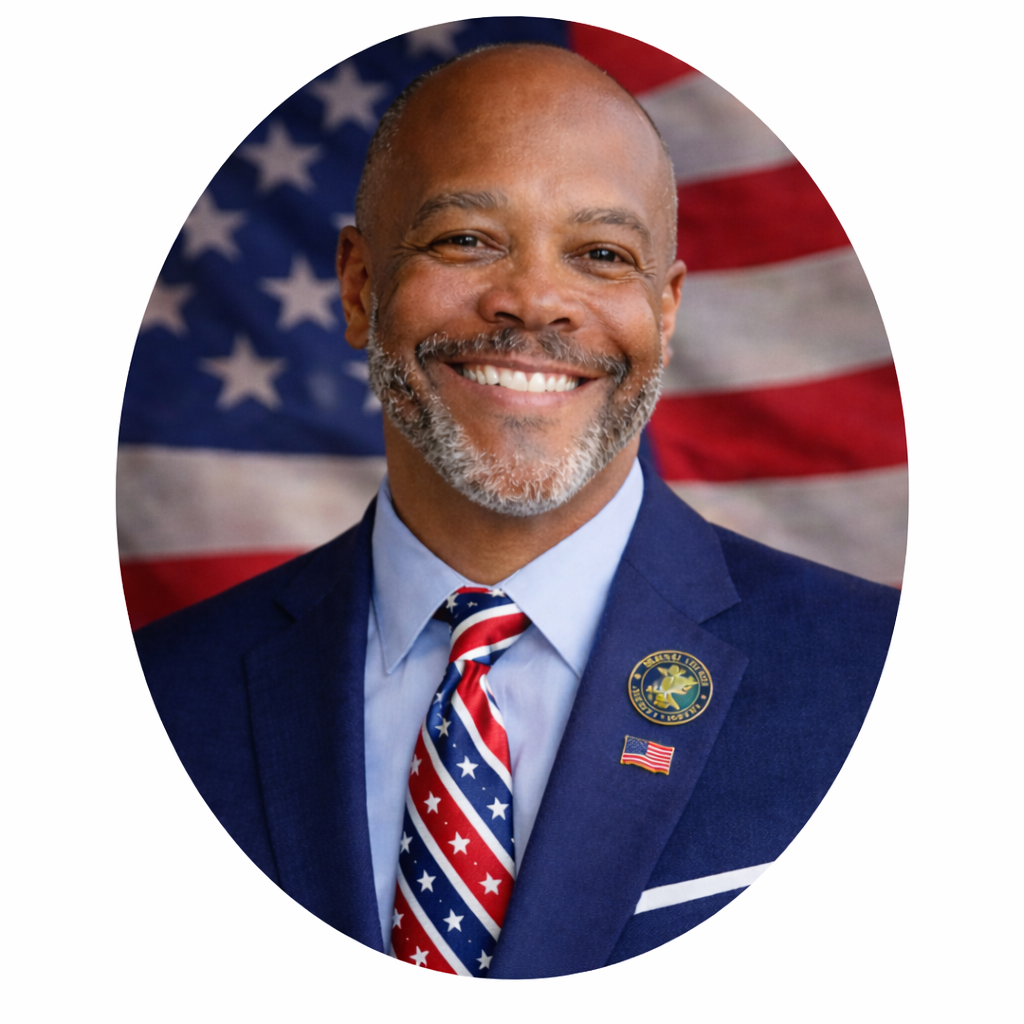
Willie Daniel
Willie Daniel is the Founder and Chief Executive Officer (CEO) of Global Vets Consulting (GVC) – National Veterans Disability Services, a veteran-led educational and medical evidence support organization dedicated to helping veterans better understand VA disability rating increases, DBQ medical evidence, secondary claims education, and C&P examination preparation.
He is a retired U.S. Army Medical Service Corps Officer with more than 27 years of honorable military service, a decorated Iraq combat veteran, and a retired federal official with the U.S. Department of Veterans Affairs. Throughout his military and federal career, Willie Daniel served in leadership, healthcare administration, operational, and veteran-support roles focused on improving services and support systems for servicemembers, veterans, and their families.
Drawing from decades of military leadership, healthcare administration, veteran advocacy, and federal government experience, Willie Daniel brings a practical, veteran-centered perspective to Global Vets Consulting’s educational articles, AI-powered veteran resources, video education initiatives, and outreach programs. His experience navigating military systems, medical documentation processes, and veteran-related administrative operations provides valuable insight into many of the challenges veterans face when seeking to better understand VA disability rating criteria, medical evidence, documentation strategies, and secondary condition education.
Through GVC’s “Veterans Helping Veterans” mission, his focus is on delivering clear, educational, and easy-to-understand information designed to empower veterans with knowledge, resources, and educational tools that may help them make more informed decisions regarding their individual VA disability journeys.
The information provided through GVC is intended for educational and informational purposes only and should not be considered legal or medical advice.
Disclaimer
Disclaimer: Global Vets Consulting, LLC (“GVC”) is a veteran-led educational and medical evidence support organization. GVC is not a law firm, is not a Veterans Service Organization (VSO), and is not affiliated with the U.S. Department of Veterans Affairs (VA) or any government agency.
Global Vets Consulting does not provide legal advice, medical advice, medical treatment, or healthcare services. GVC does not prepare, file, or submit VA disability claims on behalf of veterans. All information provided through this website, blog articles, videos, educational materials, AI tools, dashboards, templates, and communications is intended solely for general educational and informational purposes.
Veterans are encouraged to consult with accredited representatives, licensed attorneys, qualified medical providers, or Veterans Service Organizations regarding their specific legal, medical, or VA-related matters. VA disability decisions, ratings, and outcomes are determined solely by the U.S. Department of Veterans Affairs based on applicable laws, regulations, medical evidence, and individual circumstances. Past results do not guarantee future outcomes.

