
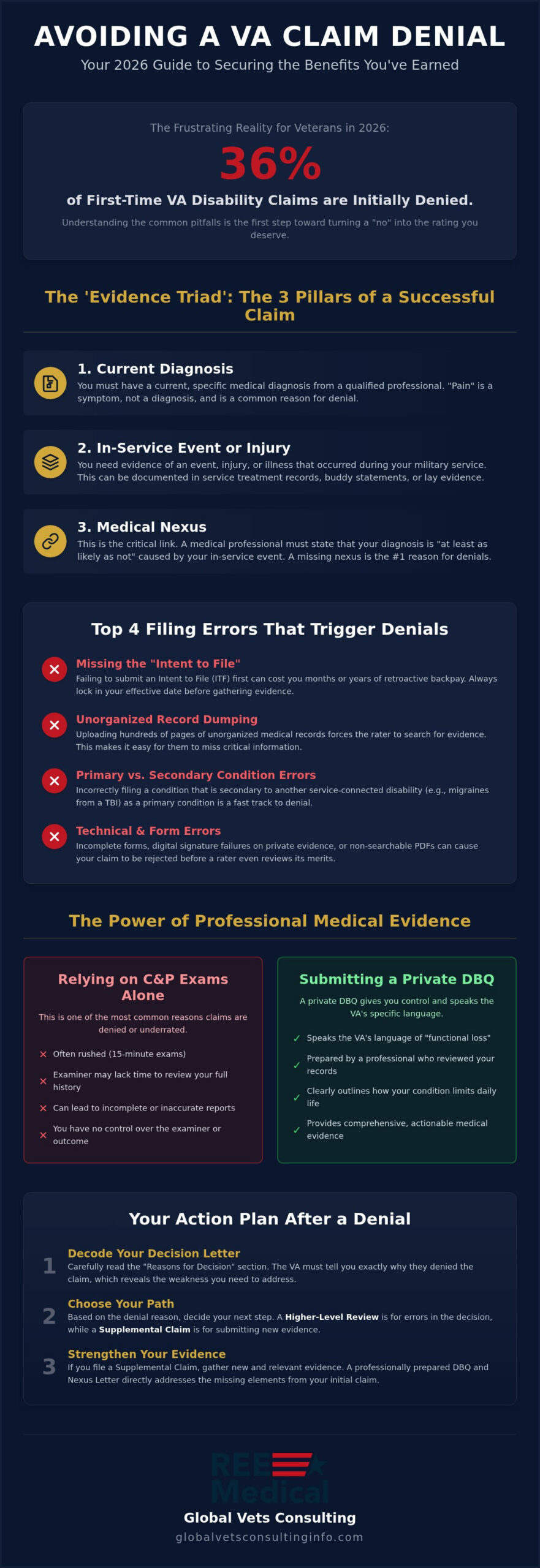
Did you know that approximately 36% of first-time VA disability claims are currently being denied in 2026? It’s a frustrating reality for many who’ve served, especially when you know your injuries are real and service-connected. Understanding the common reasons va claims are denied is the first step toward turning a “no” into the rating you actually deserve.
We understand how it feels to stare at a decision letter filled with confusing legal jargon and “VA math” that doesn’t seem to add up. You might feel like the system is ignoring your private medical records or that a biased C&P examiner dismissed your pain in minutes. In this guide, you’ll learn exactly why the VA denies these claims and how to leverage independent medical evidence, like private DBQs, to secure your earned benefits.
We’ll walk you through a 2026 checklist to identify gaps in your “evidence triad” and show you how to file a successful supplemental claim or appeal. Our goal is to provide the clarity and steady guidance you need to move forward with confidence.
Key Takeaways
- Master the “Evidence Triad” to ensure your claim includes a current diagnosis, documented service-connection, and a clear medical nexus.
- Identify the common reasons va claims are denied, such as failing to submit an “Intent to File” or providing unorganized medical records.
- Discover how professional DBQ preparation highlights your functional loss, offering a more comprehensive view than a standard C&P examination.
- Learn how to decode your “Reasons for Decision” letter to determine if a Higher-Level Review or a Supplemental Claim is your best path forward.
The VA Evidence Triad: Why Most Claims Fall Short
To win your VA disability claim, you must satisfy three specific requirements known as the “Evidence Triad.” If even one pillar is weak, your claim will likely fail. This structural requirement is at the heart of the most common reasons va claims are denied. You need a current medical diagnosis, evidence of an in-service event or injury, and a medical nexus that ties them together.
While the Veterans Health Administration (VHA) provides the framework for your care, the VA’s “Duty to Assist” often stops short of finding the specific medical link required for a rating. In 2026, a missing nexus remains the top reason for denial. Simply treating a symptom is not the same as diagnosing a condition for VA purposes. You must bridge that gap with precise documentation.
Identifying a Lack of Service Connection
Establishing a “nexus” is often the most difficult part of the process. Your medical evidence must state that your condition is “at least as likely as not” caused by your military service. This specific phrase is a legal standard that many private doctors miss. If your records don’t show this link, you can use buddy statements or lay evidence to provide context for the in-service event. However, a professional medical opinion is usually the deciding factor in proving service connection.
The Credible Diagnosis Hurdle
A frequent pitfall in the claims process is submitting “pain” as a condition. Pain is a symptom, not a diagnosis. To secure a rating, your records must reflect a specific, codified condition. This is especially true for mental health ratings. Many veterans receive treatment for symptoms like insomnia or anxiety without ever getting a formal, compensable diagnosis. Understanding these nuances helps you avoid the common reasons va claims are denied and ensures your paperwork accurately reflects your health status.
Checklist: Common Errors When Filing a VA Claim Online
Filing your claim digitally should be efficient, but technical oversights are frequent common reasons va claims are denied. To protect your rating and your backpay, follow this essential checklist:
- 🇺🇸 Missing the Intent to File: Always establish your Intent to File first to lock in your effective date. Skipping this step often results in losing months of retroactive compensation while your claim processes.
- 🇺🇸 Unorganized Record Dumping: Uploading hundreds of pages without a summary makes it easy for raters to miss key evidence. You must provide a clear roadmap rather than a “dump” of raw data.
- 🇺🇸 Primary vs. Secondary Errors: Incorrectly labeling a secondary condition, such as migraines caused by a neck injury, as a primary claim is a fast track to a denial letter.
- 🇺🇸 Digital Signature Failures: In 2026, ensure all private medical evidence follows the latest VA digital signature protocols for administrative acceptance.
🌐 Technical Pitfalls on VA.gov
Your documents must be submitted as searchable PDFs. If a rater cannot search for keywords in your DBQ or Nexus letter, they may overlook critical details. Before clicking ‘Submit,’ verify that every file is successfully attached. Preparing your files correctly through Global Vets Consulting and our medical evidence education ensures your digital claim is complete and ready for review.
📞 Form-Specific Accuracy
Errors on VA Form 21-526EZ frequently trigger automated denials in 2026. These systems flag incomplete fields instantly, so double-check every line before finalizing. Additionally, keep your contact info updated 24/7. If the VA can’t reach you for a C&P exam, they will deny your claim for ‘failure to report.’ Avoiding these common reasons va claims are denied starts with meticulous data entry. For immediate assistance, our 24/7 National Client Services Hotline and 24/7 AI Veteran Intake Specialist are ready to guide you.
Preventing Denials with Professional DBQ Preparation
A Disability Benefits Questionnaire (DBQ) is a powerful tool because it speaks the VA’s specific language of “functional loss.” Many veterans provide thousands of pages of medical records yet still face a denial. This happens because the rater isn’t looking for volume; they’re looking for specific clinical findings that match the rating schedule. If your records don’t clearly outline how your condition limits your daily life, you might find your VA Claim Denied for Lack of Evidence: How to Recover in 2026 🇺🇸.
Relying solely on a rushed, 15-minute C&P examination is one of the common reasons va claims are denied. These examiners often lack the time to review your full history, leading to incomplete or inaccurate reports. A private medical opinion provides a comprehensive look at your health, ensuring every symptom is documented correctly.
The Role of Independent Medical Evidence
Gathering the right documentation is essential for secondary claims like Sleep Apnea or Migraines. These conditions require a clear medical link to a primary service-connected disability. Global Vets Consulting streamlines this process by providing educational resources that help you gather the specific independent medical evidence needed to win. If you’re ready to take control of your claim, contact our team today for expert guidance.
Overcoming ‘Negative’ C&P Exams
You don’t have to accept a biased or inadequate VA examination. You can use a private DBQ to rebut a negative C&P exam by providing a more thorough and accurate clinical picture. Understanding What is a DBQ for VA Claims? A Veteran’s Guide allows you to submit evidence that challenges a rater’s assumptions. Using professional medical evidence is a proven strategy to combat the common reasons va claims are denied and secure the rating you’ve earned through your service.
Your 2026 Action Plan After a VA Denial
Receiving a denial letter is a setback, but it also serves as a blueprint for your eventual victory. To turn a “no” into the rating you deserve, you must follow a structured, methodical approach. Use this 2026 action plan to address the common reasons va claims are denied and regain momentum:
- 🇺🇸 Step 1: Decode the ‘Reasons for Decision’. Read this section of your letter carefully. It explicitly states which pillar of the Evidence Triad was missing, allowing you to target your response effectively.
- 🇺🇸 Step 2: Select Your Appeal Lane. Determine if your case requires a Higher-Level Review (HLR) for existing evidence errors or a Supplemental Claim for adding new medical documentation.
- 🇺🇸 Step 3: Secure New and Relevant Evidence. Gather a private 2026 DBQ or Nexus letter that specifically addresses the deficiencies cited by the VA rater.
- 🇺🇸 Step 4: Submit and Track. File your appeal and utilize our 24/7 AI Veteran Intake Specialist to monitor your claim’s status in real-time.
Higher-Level Review vs. Supplemental Claims
Choosing the right lane is critical for a timely resolution. An HLR is a “closed record” review, meaning you cannot add new evidence; it is strictly for catching rater mistakes. If the VA cited a lack of medical evidence—one of the most common reasons va claims are denied—you must file a Supplemental Claim to introduce your private DBQs. Success at the local level keeps you off the years-long Board of Veterans’ Appeals (BVA) wait list.
Executing the Supplemental Claim
Your supplemental filing must be surgical. If the previous denial was due to a missing nexus, your new evidence must provide a clear, professional medical link between your service and your condition. We are ready to assist you through every step of this process with our specialized educational resources.
📞 24/7 National Client Services Hotline: Contact us anytime for immediate guidance.
🌐 Official Website: GlobalVetsConsultingInfo.com
🇺🇸 Worldwide Support: Veterans Helping Veterans
Secure the Rating Your Service Earned
Navigating the VA system shouldn’t feel like a solo mission. By understanding the common reasons va claims are denied, you’ve already taken the most important step toward a successful appeal or rating increase. It’s essential to remember that your medical evidence must satisfy the “Evidence Triad” and translate your daily struggles into the VA’s specific language of functional loss. Whether you’re decoding a new denial letter or preparing a supplemental claim, a structured roadmap is your best tool for success.
Global Vets Consulting is a veteran-owned and operated team dedicated to helping you find that path. We provide specialized DBQ educational resources designed to strengthen your medical evidence and reduce the stress of complex paperwork. If you need immediate assistance, our 24/7 National Client Services Hotline is always open to provide steady, professional support.
Get the medical evidence you need for your claim—Contact Global Vets Consulting today!
You served your country with honor, and it’s time to ensure the system recognizes your sacrifices. Stay focused, stay organized, and know that you have a reliable partner ready to help you cross the finish line.
Frequently Asked Questions
What is the most common reason for a VA claim denial in 2026?
The most frequent reason for denial is the absence of a “nexus,” which is the medical link connecting your current condition to your service. Many veterans provide a diagnosis and service event but fail to include a professional medical opinion stating the condition is “at least as likely as not” service-connected. This structural gap remains one of the primary common reasons va claims are denied today.
Can I submit a private DBQ after my VA claim has already been denied?
Yes, you can submit a private Disability Benefits Questionnaire (DBQ) by filing a Supplemental Claim. This specific appeal lane allows you to introduce “new and relevant” evidence that wasn’t part of the original decision. A private DBQ is often the most effective way to address medical gaps identified in your denial letter, providing the rater with the clinical clarity needed to justify your rating.
Does the VA have to accept medical evidence from a private doctor?
The VA is legally required to consider all competent medical evidence you submit, including records from private physicians. While they aren’t obligated to agree with every private doctor’s findings, they can’t simply ignore them. High-quality private medical evidence often provides a more comprehensive view of your health and functional loss than a standard, rushed VA-contracted examination, helping you overcome a previous denial.
How long do I have to appeal a VA disability claim denial?
You have exactly one year from the date on your VA decision letter to file an appeal. This deadline applies to all three appeal lanes: Supplemental Claims, Higher-Level Reviews, and Board Appeals. Missing this window can result in the loss of your original effective date, which significantly reduces the amount of backpay you’re eligible to receive. It’s critical to act before this 12-month window closes.
What happens if I missed my C&P exam and my claim was denied?
If you miss a Compensation and Pension (C&P) exam, the VA will likely deny your claim for “failure to report.” To resolve this, you must file a Supplemental Claim and provide a valid reason for the missed appointment. This is among the common reasons va claims are denied that you can fix by requesting a new exam and ensuring your contact information is updated for future notifications.
Article by
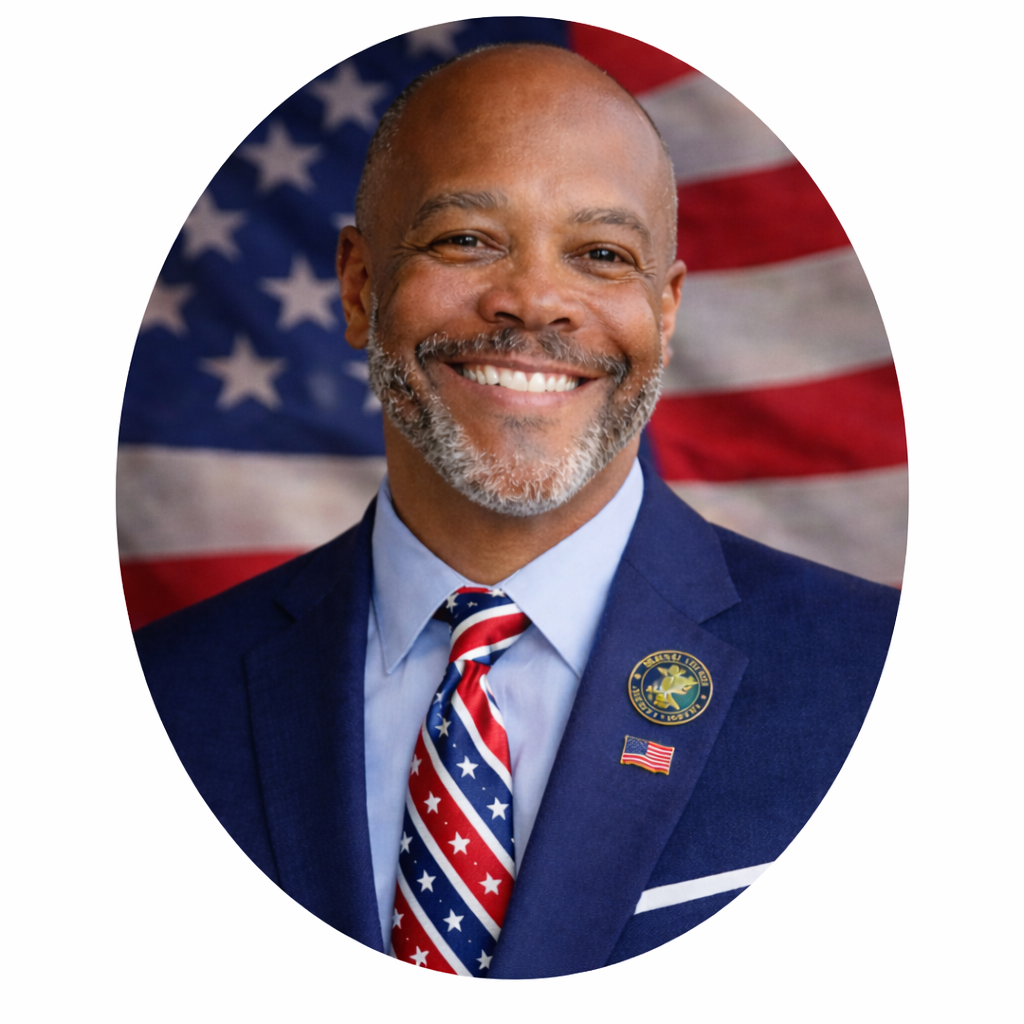
Willie Daniel
Willie Daniel is the Founder and Chief Executive Officer (CEO) of Global Vets Consulting (GVC) – National Veterans Disability Services, a veteran-led educational and medical evidence support organization dedicated to helping veterans better understand VA disability rating increases, DBQ medical evidence, secondary claims education, and C&P examination preparation.
He is a retired U.S. Army Medical Service Corps Officer with more than 27 years of honorable military service, a decorated Iraq combat veteran, and a retired federal official with the U.S. Department of Veterans Affairs. Throughout his military and federal career, Willie Daniel served in leadership, healthcare administration, operational, and veteran-support roles focused on improving services and support systems for servicemembers, veterans, and their families.
Drawing from decades of military leadership, healthcare administration, veteran advocacy, and federal government experience, Willie Daniel brings a practical, veteran-centered perspective to Global Vets Consulting’s educational articles, AI-powered veteran resources, video education initiatives, and outreach programs. His experience navigating military systems, medical documentation processes, and veteran-related administrative operations provides valuable insight into many of the challenges veterans face when seeking to better understand VA disability rating criteria, medical evidence, documentation strategies, and secondary condition education.
Through GVC’s “Veterans Helping Veterans” mission, his focus is on delivering clear, educational, and easy-to-understand information designed to empower veterans with knowledge, resources, and educational tools that may help them make more informed decisions regarding their individual VA disability journeys.
The information provided through GVC is intended for educational and informational purposes only and should not be considered legal or medical advice.
Disclaimer
Disclaimer: Global Vets Consulting, LLC (“GVC”) is a veteran-led educational and medical evidence support organization. GVC is not a law firm, is not a Veterans Service Organization (VSO), and is not affiliated with the U.S. Department of Veterans Affairs (VA) or any government agency.
Global Vets Consulting does not provide legal advice, medical advice, medical treatment, or healthcare services. GVC does not prepare, file, or submit VA disability claims on behalf of veterans. All information provided through this website, blog articles, videos, educational materials, AI tools, dashboards, templates, and communications is intended solely for general educational and informational purposes.
Veterans are encouraged to consult with accredited representatives, licensed attorneys, qualified medical providers, or Veterans Service Organizations regarding their specific legal, medical, or VA-related matters. VA disability decisions, ratings, and outcomes are determined solely by the U.S. Department of Veterans Affairs based on applicable laws, regulations, medical evidence, and individual circumstances. Past results do not guarantee future outcomes.