What if a ten-minute medical appointment could undo years of documented service history? It’s a common fear for many veterans who walk out of a Compensation and Pension exam feeling ignored or misunderstood. If you’ve received a report that feels inaccurate or incomplete, you aren’t alone in your frustration. Knowing how to challenge a c&p examiner’s opinion is the most effective way to protect the benefits you’ve earned, especially with the 2026 COLA increase of 2.8% making every rating point more valuable for your family’s security. 🇺🇸
We understand that the VA’s administrative jargon often feels like a barrier to the justice you deserve. You shouldn’t have to worry that a single flawed opinion will result in a denial, especially since the VA’s attempt to change 38 C.F.R. § 4.10 regarding medication was rescinded in February 2026. This guide provides the exact steps to identify a flawed C&P exam and the strategic moves needed to counter an unfavorable medical opinion with stronger evidence. We’ll explain how to request a new exam, submit a private Disability Benefits Questionnaire (DBQ) to override errors, and secure a fair disability rating. Our mission is to provide this expert guidance to veterans worldwide. 🌎
Key Takeaways
- Identify the specific red flags of an inadequate exam, such as a missed goniometer test or an appointment that lasts less than 15 minutes for a complex condition.
- Learn exactly how to challenge a c&p examiner’s opinion by filing a Memorandum for Record and contacting the VA to request a new examination immediately.
- Understand why submitting a private Disability Benefits Questionnaire (DBQ) provides the objective medical evidence needed to override a rushed or biased examiner’s report.
- Determine the most effective appeal path by choosing between a Supplemental Claim for new evidence or a Higher-Level Review for legal errors.
- Gain a clear, step-by-step strategy to navigate the VA’s administrative processes and secure the disability rating increase you’ve earned through your service.
Recognizing the Signs of an Inadequate C&P Examination
Walking into a C&P exam can feel like the most important appointment of your life. If you leave feeling like the doctor barely looked at you, it’s time to learn how to challenge a c&p examiner’s opinion. The Veterans Benefits Administration (VBA) relies heavily on these reports to decide your future. An inadequate exam is a direct threat to your VA disability claim and your financial security. 🇺🇸
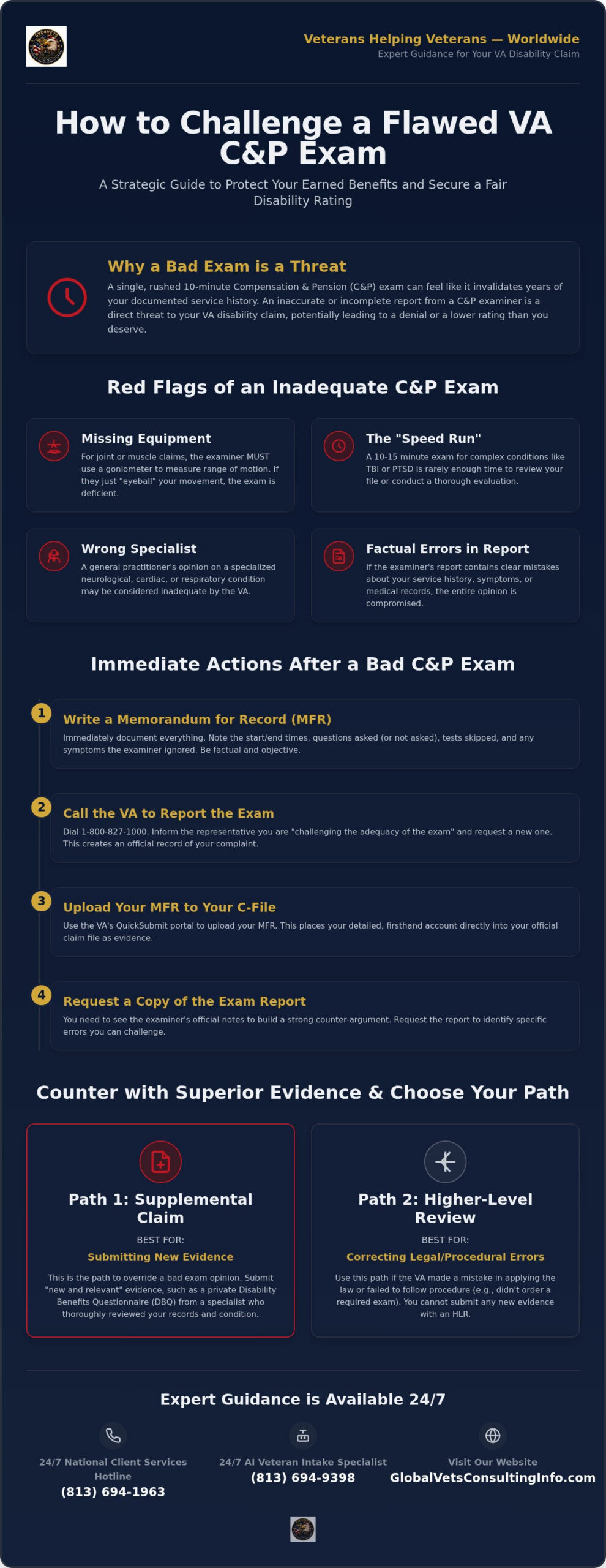
Knowing how to challenge a c&p examiner’s opinion starts with identifying specific failures during the appointment. Watch for these red flags: 📋
- Missing Equipment: For musculoskeletal claims, the examiner must use a goniometer to measure range of motion. If they just “eyeballed” your movement, the exam is technically deficient.
- The “Speed Run”: A 10-minute appointment for a complex condition like TBI or Sleep Apnea is rarely enough time to review your medical evidence.
- Wrong Specialist: A general nurse practitioner shouldn’t be the final word on a specialized neurological or cardiac condition.
- Factual Errors: If the report contains inaccuracies regarding your service history or when your symptoms began, the entire medical opinion is compromised.
Procedural vs. Substantive Errors
Procedural errors happen when the examiner ignores the VA’s own rulebook, known as the M21-1 Adjudication Procedures Manual. If they skip a required test or fail to review your records, they’ve failed the process. Substantive errors are different. These occur when an examiner’s conclusion directly contradicts the medical evidence already sitting in your C-File. If your private doctor’s records show a clear diagnosis but the examiner says you’re fine, that’s a substantive error you must address.
Challenging Examiner Qualifications
You have the right to an “adequate” medical opinion. This means the examiner must have the expertise to assess your specific condition. If a general practitioner denies a service connection for a complex respiratory issue, you can challenge their competency. An adequate opinion must be based on a thorough review of your entire record and supported by sound medical reasoning. Don’t let an unqualified opinion stand between you and your rating increase. 🩺
Step-by-Step: Immediate Actions After a Bad C&P Exam
Most veterans wait for a decision letter before they react to a poor exam. That’s a mistake that can cost you months of back pay. If you want to know how to challenge a c&p examiner’s opinion effectively, you must start the paper trail the moment you leave the clinic. Acting while the details are fresh ensures your protest is accurate and difficult for the VA to ignore. 🇺🇸
Take these four steps immediately to protect your claim: 📋
- Write a Memorandum for Record (MFR): Document the exam start and end times, the questions asked, and any physical tests skipped.
- Call the VA: Dial 1-800-827-1000 to report the examiner. 📞 Tell the representative you are “challenging the adequacy of the exam” and request a new one.
- Upload your MFR: Use the VA QuickSubmit portal to get your statement into your C-File immediately. 💻
- Request the Report: You need to see the examiner’s actual notes to build a strong counter-argument.
By taking these steps, you create a foundation for using the official VA decision review options later. This proactive approach signals to the VA that you are informed and will not accept a sub-standard medical evaluation.
Drafting an Effective Memorandum for Record (MFR)
Your MFR should be a clinical, objective account of the appointment. Include the examiner’s name and the facility location. Focus on what didn’t happen. For example, write “the examiner did not touch my back to assess pain” rather than “the doctor didn’t care.” Mention specific symptoms you raised that the examiner refused to document. This document acts as your primary evidence when you argue the exam was insufficient. If you feel overwhelmed by the technical requirements, seeking independent medical evidence education can help you align your statement with VA standards.
How to Obtain Your C&P Exam Results
If your exam occurred at a VA facility, you can usually download the results via the Blue Button report on MyHealtheVet within 30 days. For exams conducted by third-party contractors like VES or QTC, the process is slower. You must submit a FOIA request (VA Form 20-10206) to get a copy. Understanding how to challenge a c&p examiner’s opinion is much easier when you can highlight the exact boxes the doctor checked incorrectly.
Countering the Opinion with Superior Medical Evidence
If you’ve ever felt like a number during a C&P exam, you aren’t alone. The most effective strategy for how to challenge a c&p examiner’s opinion is to render their report irrelevant with superior evidence. While the VA examiner might only see you for fifteen minutes, your own medical history tells a much deeper story. You don’t have to accept a rushed opinion as the final word on your health. 🇺🇸
The key to a successful rebuttal lies in the language used. If you’ve already seen a VA claim denied for lack of evidence, you know that the VA requires specific terminology. Your medical evidence must state that your condition is “at least as likely as not” caused by your service. This means there is a 50% or greater probability of a service connection. When Filing a Supplemental Claim, your goal is to introduce this “new and relevant” evidence to tip the scales in your favor.
The Power of a Private DBQ
A private Disability Benefits Questionnaire (DBQ) is often the strongest tool in your arsenal. Unlike a C&P exam, which provides a brief snapshot of your symptoms, a private DBQ allows for a comprehensive review of your condition over time. It ensures that every symptom, flare-up, and functional limitation is documented accurately. Understanding what is a dbq for va claims is essential because it gives you control over the medical narrative. A well-prepared DBQ can highlight errors in the VA examiner’s findings and provide the clinical depth needed for a rating increase. 📋
Independent Medical Opinions (IMOs)
When a general practitioner at a C&P exam denies a connection for a complex issue like TBI or Sleep Apnea, an Independent Medical Opinion (IMO) from a specialist becomes vital. A specialist can provide a detailed Nexus Letter that points out logical flaws in the C&P examiner’s rationale. This professional medical rebuttal carries significant weight because it comes from an expert with specific knowledge of your condition. You can get started with professional DBQ preparation to ensure your medical evidence speaks the VA’s language and stands up to scrutiny. 🩺
Navigating the VA Appeal Paths: Supplemental vs. HLR
Once you’ve identified errors and gathered your evidence, you must choose the right lane to fix the problem. The VA disability claims process step by step becomes more technical during this phase. Knowing how to challenge a c&p examiner’s opinion requires understanding which appeal lane fits your specific situation. Choosing the wrong path can lead to unnecessary delays in a system that is already processing over two million claims this fiscal year. 🇺🇸
If the examiner failed to review your records or skipped a required physical test, they’ve violated the VA’s “Duty to Assist.” This error can trigger a remand, which essentially cancels the bad exam and orders a new one. Your goal is to use the appeal process to force the VA to recognize these procedural or medical failures. 📋
When to File a Supplemental Claim
This is your best path if you have obtained a private DBQ or a new medical nexus letter. A Supplemental Claim allows you to submit “new and relevant” evidence that wasn’t part of the original decision. If your challenge is based on the fact that the examiner was wrong about your medical status or symptoms, this lane is the most effective. As of June 2026, the average processing time for supplemental claims is 57 days. This makes it a relatively fast way to get your rebuttal package in front of a rater at the Regional Office.
Higher-Level Review (HLR) Strategies
Choose a Higher-Level Review if you believe the evidence already in your file was sufficient, but the rater made a legal or factual mistake. This is a “closed record” review, meaning you cannot submit new evidence like a private DBQ here. It’s strictly for pointing out existing mistakes. We suggest requesting an informal conference. This gives you a chance to speak directly with a senior rater. You can then explain exactly how the C&P examiner’s opinion was inadequate or ignored the medical evidence already present in your C-File. 📞
Secure the Disability Rating Your Service Earned
You’ve dedicated years to serving your country; you shouldn’t have to spend years fighting a single flawed medical report. Understanding how to challenge a c&p examiner’s opinion is about more than just pointing out mistakes. It’s about replacing a rushed snapshot with a comprehensive clinical narrative that reflects your daily reality. By documenting the exam details immediately and choosing the most effective appeal lane, you take the power back from the bureaucracy. With the 2.8% COLA increase for 2026 making every rating point vital, ensuring your medical evidence is accurate is a critical mission. 🇺🇸
Our team understands the stress of an unfavorable exam. Don’t let a bad exam stall your benefits, get a professional DBQ from Global Vets Consulting today. As a veteran-owned and operated firm, we specialize in detailed DBQ documentation and evidence education. We are here for you 24/7 through our National Client Services Hotline and our AI Veteran Intake Specialist. You earned these benefits through your sacrifice. With a clear strategy and stronger evidence, you can overcome an inadequate exam and secure the fair rating you deserve. 🌎
Global Vets Consulting – Worldwide
24/7 National Client Services Hotline
24/7 AI Veteran Intake Specialist
Frequently Asked Questions
Can I refuse to go to a C&P exam if I already submitted a private DBQ?
You should not refuse to attend a scheduled C&P exam, even if you have already submitted a private DBQ. The VA has the legal authority to request their own medical opinion to evaluate your disability claim. If you fail to report, the VA will likely deny your claim for “failure to report” without even looking at your private evidence. It is much safer to attend the appointment and document any errors for a later challenge.
What happens if the VA ignores my Memorandum for Record (MFR)?
If the VA ignores your MFR and denies your claim based on the flawed exam, your next step is filing a Higher-Level Review (HLR). During the HLR informal conference, you can explain to the senior rater that the previous examiner provided an inadequate opinion and the VA failed its duty to assist by ignoring your protest. Senior raters often recognize these procedural failures and will remand the case for a new, sufficient examination.
Will challenging an examiner make the VA biased against my future claims?
Challenging an examiner will not cause bias or negative treatment toward your future VA disability claims. The system is designed to handle disagreements, and thousands of veterans successfully learn how to challenge a c&p examiner’s opinion every year to protect their earned ratings. Raters are required to follow the law and evaluate evidence objectively. Your focus should remain on the accuracy of your medical documentation rather than fearing administrative retaliation.
Article by
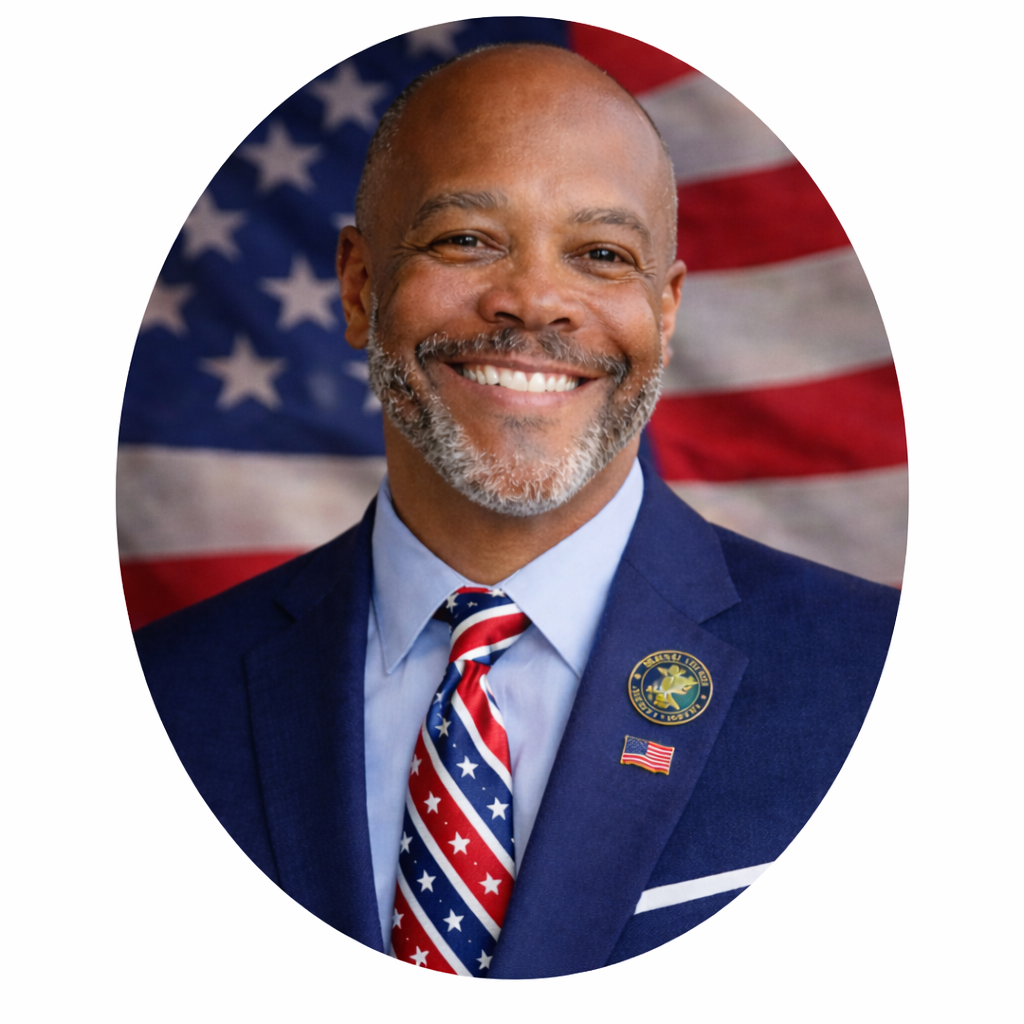
Willie Daniel
Willie Daniel is the Founder and Chief Executive Officer (CEO) of Global Vets Consulting (GVC4Vets) – National Veterans Disability Services, a veteran-led educational and medical evidence support organization dedicated to helping veterans better understand VA disability rating increases, DBQ medical evidence, secondary claims education, and C&P examination preparation.
He is a retired U.S. Army Medical Service Corps Officer with more than 27 years of honorable military service, a decorated Iraq combat veteran, and a retired federal official with the U.S. Department of Veterans Affairs. Throughout his military and federal career, Willie Daniel served in leadership, healthcare administration, operational, and veteran-support roles focused on improving services and support systems for servicemembers, veterans, and their families.
Drawing from decades of military leadership, healthcare administration, veteran advocacy, and federal government experience, Willie Daniel brings a practical, veteran-centered perspective to Global Vets Consulting’s educational articles, AI-powered veteran resources, video education initiatives, and outreach programs. His experience navigating military systems, medical documentation processes, and veteran-related administrative operations provides valuable insight into many of the challenges veterans face when seeking to better understand VA disability rating criteria, medical evidence, documentation strategies, and secondary condition education.
Through GVC’s “Veterans Helping Veterans” mission, his focus is on delivering clear, educational, and easy-to-understand information designed to empower veterans with knowledge, resources, and educational tools that may help them make more informed decisions regarding their individual VA disability journeys.
The information provided through GVC is intended for educational and informational purposes only and should not be considered legal or medical advice.
Disclaimer
Disclaimer: Global Vets Consulting, LLC (“GVC”) is a veteran-led educational and medical evidence support organization. GVC is not a law firm, is not a Veterans Service Organization (VSO), and is not affiliated with the U.S. Department of Veterans Affairs (VA) or any government agency.
Global Vets Consulting does not provide legal advice, medical advice, medical treatment, or healthcare services. GVC does not prepare, file, or submit VA disability claims on behalf of veterans. All information provided through this website, blog articles, videos, educational materials, AI tools, dashboards, templates, and communications is intended solely for general educational and informational purposes.
Veterans are encouraged to consult with accredited representatives, licensed attorneys, qualified medical providers, or Veterans Service Organizations regarding their specific legal, medical, or VA-related matters. VA disability decisions, ratings, and outcomes are determined solely by the U.S. Department of Veterans Affairs based on applicable laws, regulations, medical evidence, and individual circumstances. Past results do not guarantee future outcomes.