
How can a medical examiner who spent less than 15 minutes in the room with you accurately document years of service-connected pain? It is a common and deeply frustrating experience to walk out of a C&P exam feeling dismissed, knowing the documentation likely won’t reflect your daily reality. You’ve worked hard for your benefits, and the fear of a low rating due to a rushed appointment is a heavy burden to carry. Getting a second opinion after a va exam is not just an option; it’s a strategic right that allows you to provide a more accurate picture of your health.
This guide provides a clear roadmap for securing an independent medical opinion and using private Disability Benefits Questionnaires (DBQs) to override a flawed exam. You’ll learn how to present evidence that the VA is legally required to consider alongside their own findings. We will break down the process of gathering technical medical evidence that speaks the VA’s language, ensuring your rating is based on thorough documentation rather than a single, hurried encounter. By the end of this article, you’ll understand how to turn a bad exam into a successful rebuttal that helps you secure the rating you’ve earned.
Key Takeaways
- Understand your legal right to challenge a rushed C&P exam by submitting an Independent Medical Opinion (IMO) or private medical evidence.
- Learn why private DBQs are the most effective method for getting a second opinion after a va exam to ensure your symptoms are documented accurately.
- Discover how to request your exam results through a FOIA request to identify “clear and unmistakable errors” or omitted medical details.
- Find out how to use thorough private documentation to override brief, 15-minute C&P appointments and substantiate a higher VA disability rating.
- Explore how expert DBQ preparation can streamline your rebuttal process and provide the precise medical evidence needed to strengthen your claim.
Why Getting a Second Opinion After a VA Exam is Your Legal Right
Many veterans believe the Compensation and Pension (C&P) examiner has the final word on their claim. This is a common misconception that often leads to missed benefits and unnecessary frustration. In the VA context, getting a second opinion after a va exam typically means securing an Independent Medical Opinion (IMO) or a private Disability Benefits Questionnaire (DBQ). While the VA has a “Duty to Assist” you in gathering evidence, that doesn’t mean their contracted medical providers are infallible. You have a clear legal right to provide superior medical evidence to counter a rushed or inaccurate government assessment.
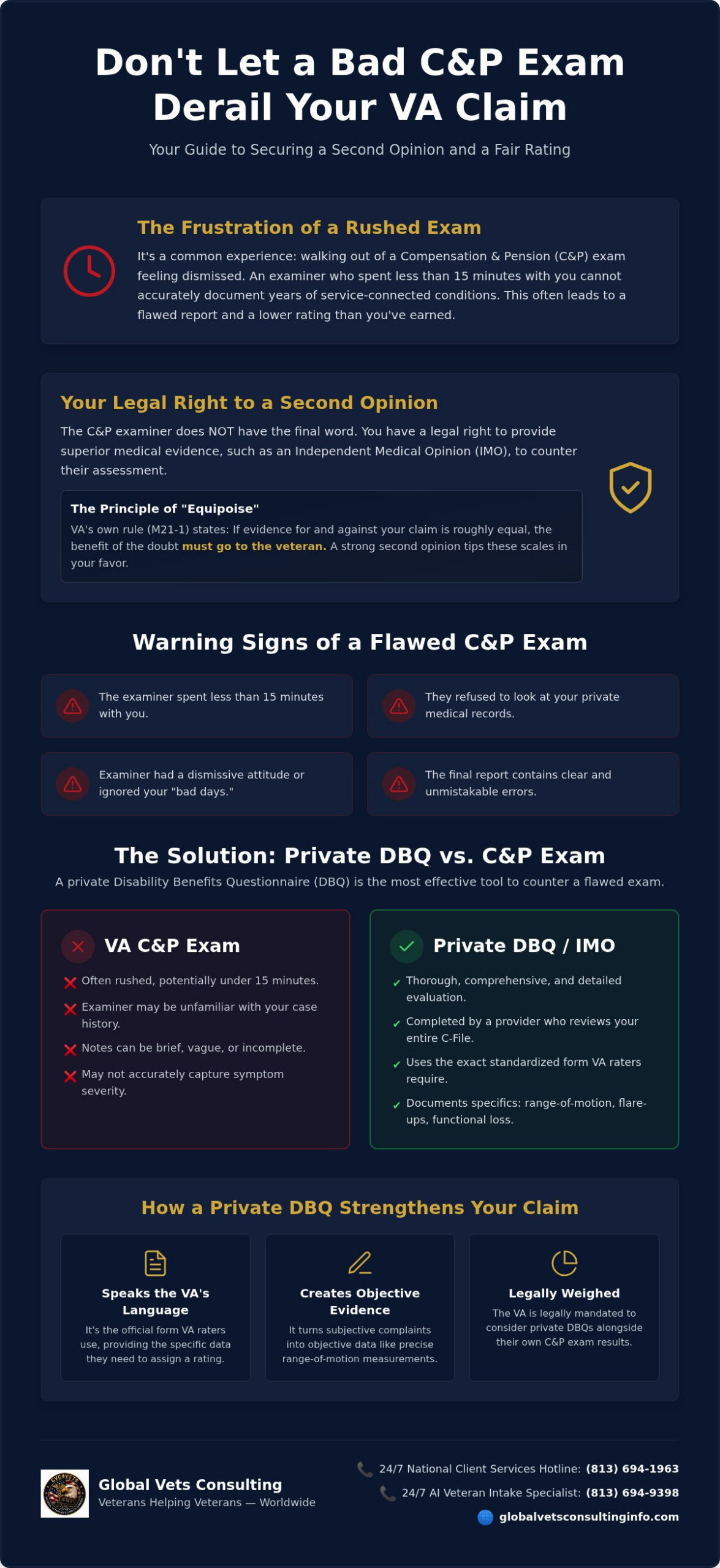
The VA adjudication manual (M21-1) recognizes a legal concept called “equipoise.” This principle states that if the medical evidence for and against your claim is roughly equal, the benefit of the doubt must go to the veteran. By providing a high-quality second opinion, you can tip the scales in your favor. It’s a way to ensure that a single, poorly performed exam doesn’t dictate your financial future or your access to care.
When should you seek an independent medical opinion?
You should consider getting a second opinion after a va exam if you noticed specific red flags during your appointment. These warning signs often indicate that the examiner’s report will be insufficient or negative. Consider a rebuttal if:
- The examiner spent less than 15 minutes in the room with you.
- They refused to look at the private medical records or logs you brought to the appointment.
- The examiner had a dismissive attitude or ignored your descriptions of “bad days.”
- The final report contains “clear and unmistakable errors” regarding your diagnosis or symptoms.
Ideally, a va disability claims process step by step should include private evidence from the very beginning to prevent these issues before they start. However, it’s never too late to introduce accurate documentation into your file.
The power of private evidence in 2026
As of 2026, the VA is legally mandated to consider private DBQs alongside C&P results. Private doctors often provide a more thorough review because they take the time to examine your entire “C-File” (Claims File) rather than just skimming a summary. This comprehensive look at your history is foundational to the VA disability claims process, as it ensures your current limitations are linked directly to your military service. Private evidence serves as a professional rebuttal that forces the VA to weigh all the facts, not just the ones gathered during a 20-minute contractor exam.
How to Use a Private DBQ as Your Medical Second Opinion
When you decide that getting a second opinion after a va exam is necessary, you need the right tool for the job. That tool is the Disability Benefits Questionnaire. Understanding what is a dbq is essential because it’s the exact form VA raters use to assign a disability percentage. While a C&P examiner might jot down brief, hurried notes, a private DBQ allows for a comprehensive recording of your symptoms, frequency, and severity.
A major benefit of using these forms is that they force a standardized evaluation. Instead of a vague description of “back pain,” a DBQ requires specific range-of-motion measurements and details on how your condition impacts your daily life. This level of detail is often the difference between a successful rating and a va claim denied for lack of evidence. Many experts recommend seeking independent medical opinions to ensure the VA rater has a complete medical picture that contractor exams often miss.
Standardized evidence vs. informal doctor notes
You might be tempted to just ask your family doctor for a quick letter. However, the VA rater needs specific data points to justify a rating increase. Informal notes often lack the precise terminology or the checkbox format required by VA adjudication guidelines. Using the official DBQ format ensures that every necessary metric, from flare-ups to functional loss, is clearly documented. If you’re ready to secure accurate evidence, you can start your intake process today through a professional consultation.
Addressing mental health and physical conditions
For those dealing with psychological trauma, a dbq for mental health conditions is a vital asset. It captures symptoms like social isolation or occupational impairment that you might struggle to articulate during a stressful, 15-minute C&P exam. These second opinions provide the space to detail your “social and industrial impairment,” which is a primary factor in determining your overall mental health rating. This thoroughness ensures your documentation reflects your actual life, not just a snapshot from a single appointment.
Step-by-Step Guide to Getting a Second Opinion After Your Exam
Success in the VA claims process requires a methodical approach. If you’ve identified red flags in your recent appointment, getting a second opinion after a va exam is the most effective way to protect your rating. This isn’t just about complaining; it’s about building a superior evidence file that forces the VA to reconsider their position. The process of getting a second opinion after a va exam doesn’t have to be overwhelming if you follow these specific steps to take control of your documentation.
- Step 1: Request your results. You can’t fight what you haven’t seen. Immediately contact your VSO or file a Freedom of Information Act (FOIA) request to obtain a copy of the C&P examiner’s notes.
- Step 2: Audit the report. Scan the document for “clear and unmistakable errors.” Check if they omitted symptoms you mentioned or downplayed the frequency of your flare-ups.
- Step 3: Secure professional evidence. Work with a private medical provider or a specialized consulting service to complete a DBQ. This ensures your medical evidence is thorough and technically accurate.
- Step 4: Submit a Supplemental Claim. Use VA Form 20-0995 to submit your new evidence. This allows the VA to review the claim again with the added context of your second opinion.
Critiquing your C&P exam report
When reviewing the examiner’s work, look for technical failures. For musculoskeletal claims, check if the examiner used a goniometer to measure your range of motion. If they “eyeballed” your movement, the exam is inherently flawed. Document every discrepancy between what you told the examiner and what they recorded. If you said you have “bad days” four times a week but they wrote “occasional discomfort,” that’s a critical error you must highlight. If you need help identifying these gaps, connect with our Veteran Intake Specialist for immediate guidance.
Pairing your DBQ with a Statement in Support of Claim
Your medical second opinion is powerful, but it’s even stronger when paired with a Statement in Support of Claim (VA Form 21-4138). Use this form to guide the rater’s eye directly to the findings in your private DBQ. Lay evidence is competent evidence when it describes observable symptoms. By explaining how your condition impacts your daily life in plain English, you provide the human context that a clinical form might miss, creating an undeniable link between your service and your current limitations.
How Global Vets Consulting Supports Your Second Opinion Strategy
Global Vets Consulting operates with a “Veterans Helping Veterans” mission. We understand the specific frustrations of a dismissive C&P exam because many of us have been in your boots. Our focus is on providing Independent Medical Evidence Education so you can approach your claim with steady confidence. By streamlining the evidence-gathering process, we ensure your documentation is technically accurate and thorough. This methodical approach is the key to getting a second opinion after a va exam that actually moves the needle on your claim.
We specialize in standardized DBQ forms that detail the severity of service-connected conditions. Our goal is to bridge the gap between your medical history and the VA’s rating criteria. We provide the resources you need to speak the “VA language” fluently, ensuring your symptoms aren’t lost in translation. Whether you’re stateside or abroad, our commitment to 24/7 availability for veterans worldwide 🌐 ensures you always have a partner in your corner.
Ready to take control of your claim? 🇺🇸
If your current rating doesn’t reflect your daily reality, it’s time to act. Many veterans discover that their initial exams failed to capture the full scope of their limitations. Taking the step of getting a second opinion after a va exam is about more than just disagreement; it’s about accuracy. You can use a dbq for va disability rating increase to present a more accurate medical picture. Our education focuses on documenting specific metrics like frequency and severity that raters need to see to justify a higher percentage.
Contact our intake specialists today
You don’t have to navigate this complex system alone. We provide a clear, predictable path forward to help you secure the benefits you’ve earned through your service. Our team is ready to assist you at any time.
- 📞 24/7 National Client Services Hotline
- 🤖 24/7 AI Veteran Intake Specialist
- 🌐 Worldwide Support and Accessibility
Visit GlobalVetsConsultingInfo.com today to review your documentation needs and start your rebuttal strategy with a knowledgeable ally. We are dedicated to providing the meticulous support you need for a successful outcome.
Take Control of Your VA Rating Today
A bad C&P exam isn’t the final word on your disability claim; it’s an opportunity to provide a more accurate record of your service-connected conditions. By auditing your exam results for errors and securing a private DBQ, you ensure the VA rater sees the full severity of your symptoms rather than a 15-minute snapshot. The strategic process of getting a second opinion after a va exam allows you to tip the scales of equipoise in your favor. You’ve earned your benefits through service, and your documentation should reflect that reality with technical precision.
As a veteran-owned and operated team, Global Vets Consulting specializes in medical evidence education to help you speak the VA’s language. Our 24/7 AI Veteran Intake Specialist is available to help you start your documentation review immediately, regardless of your location. Don’t let a rushed appointment dictate your future when professional, thorough evidence is within reach. Ready to secure a medical second opinion? Contact Global Vets Consulting today for expert DBQ preparation support. Your health and your history deserve to be documented with the respect and meticulousness they require.
Frequently Asked Questions
Can the VA ignore a second opinion from a private doctor?
No, the VA is legally required to weigh all medical evidence you submit, including private documentation. Under the VA adjudication manual, if your private evidence is just as persuasive as the C&P examiner’s report, the rater must apply the “benefit of the doubt” rule. This is why getting a second opinion after a va exam is such an effective strategy; it forces the rater to address contradictory evidence rather than relying solely on a single, potentially flawed government exam.
How do I get a copy of my C&P exam results to see what they wrote?
You can obtain your results by submitting a Freedom of Information Act (FOIA) request to the VA or by contacting your Veterans Service Officer (VSO). While VSOs can often view the results in the electronic system shortly after the appointment, a formal FOIA request for your full claim file provides the most complete record. It’s essential to review these notes to identify any missed symptoms or inaccuracies before you begin the process of getting a second opinion after a va exam.
Is it too late to get a second opinion if the VA already made a decision?
It’s not too late to submit new evidence even after a decision has been rendered. You can file a Supplemental Claim using VA Form 20-0995 and include your private medical evidence as “new and relevant” information. This action reopens the claim and requires the VA to re-evaluate your rating based on the updated documentation. This path is often faster and more effective for many veterans than waiting years for a Board Appeal.
What is the difference between a Nexus Letter and a second opinion DBQ?
A Nexus Letter specifically establishes the medical link between your current condition and your military service. In contrast, a Disability Benefits Questionnaire (DBQ) is designed to document the current severity of your symptoms to determine your disability rating. While both are types of independent medical evidence, the DBQ is the specific tool used by raters to assign a percentage. This makes it the primary document for challenging a low rating or a rushed exam.
Do I have to attend a VA exam if I already submitted a private DBQ?
Yes, you should generally attend all scheduled VA exams even if you have already submitted private evidence. While the VA is required to consider private DBQs, failure to show up for a mandatory C&P exam can result in an immediate claim denial. The best strategy is to attend the appointment and then use your private documentation as a rebuttal if the VA examiner provides an inaccurate or incomplete report of your condition.
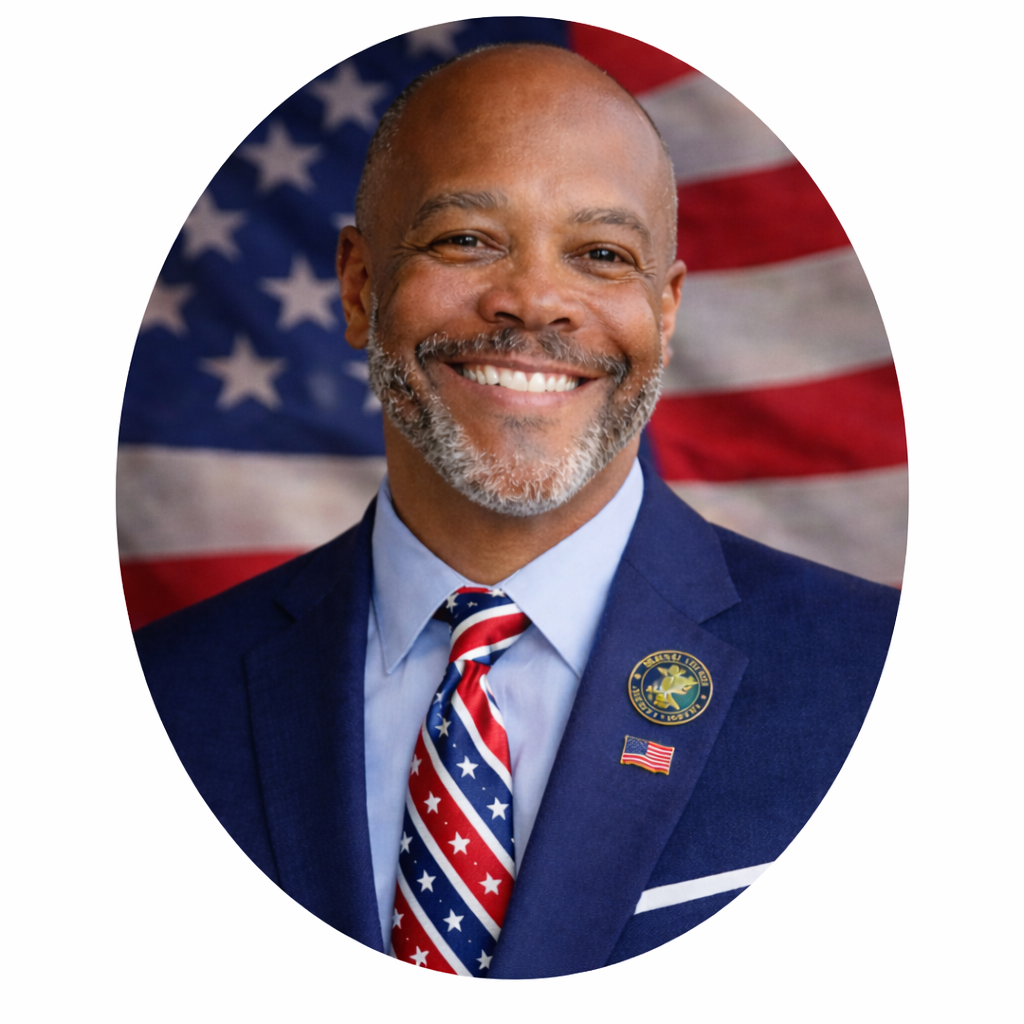
Article by
Willie Daniel
Willie Daniel is the Founder and Chief Executive Officer (CEO) of Global Vets Consulting (GVC4Vets) – National Veterans Disability Services, a veteran-led educational and medical evidence support organization dedicated to helping veterans better understand VA disability rating increases, DBQ medical evidence, secondary claims education, and C&P examination preparation.
He is a retired U.S. Army Medical Service Corps Officer with more than 27 years of honorable military service, a decorated Iraq combat veteran, and a retired federal official with the U.S. Department of Veterans Affairs. Throughout his military and federal career, Willie Daniel served in leadership, healthcare administration, operational, and veteran-support roles focused on improving services and support systems for servicemembers, veterans, and their families.
Drawing from decades of military leadership, healthcare administration, veteran advocacy, and federal government experience, Willie Daniel brings a practical, veteran-centered perspective to Global Vets Consulting’s educational articles, AI-powered veteran resources, video education initiatives, and outreach programs. His experience navigating military systems, medical documentation processes, and veteran-related administrative operations provides valuable insight into many of the challenges veterans face when seeking to better understand VA disability rating criteria, medical evidence, documentation strategies, and secondary condition education.
Through GVC’s “Veterans Helping Veterans” mission, his focus is on delivering clear, educational, and easy-to-understand information designed to empower veterans with knowledge, resources, and educational tools that may help them make more informed decisions regarding their individual VA disability journeys.
The information provided through GVC is intended for educational and informational purposes only and should not be considered legal or medical advice.
Disclaimer
Disclaimer: Global Vets Consulting, LLC (“GVC”) is a veteran-led educational and medical evidence support organization. GVC is not a law firm, is not a Veterans Service Organization (VSO), and is not affiliated with the U.S. Department of Veterans Affairs (VA) or any government agency.
Global Vets Consulting does not provide legal advice, medical advice, medical treatment, or healthcare services. GVC does not prepare, file, or submit VA disability claims on behalf of veterans. All information provided through this website, blog articles, videos, educational materials, AI tools, dashboards, templates, and communications is intended solely for general educational and informational purposes.
Veterans are encouraged to consult with accredited representatives, licensed attorneys, qualified medical providers, or Veterans Service Organizations regarding their specific legal, medical, or VA-related matters. VA disability decisions, ratings, and outcomes are determined solely by the U.S. Department of Veterans Affairs based on applicable laws, regulations, medical evidence, and individual circumstances. Past results do not guarantee future outcomes.